|
1.
CENTRAL AND WEST AFRICA
Market activity
International markets remain quiet as the summer holiday
period begins across Europe and within many government
administrations in West and Central Africa. Overall,
timber production has recovered to around 70% of normal
capacity. Approximately 30% of production capacity
remains idle, largely among Chinese-operated sawmills
that have yet to return to full production.
Forest authorities across the region continue to strengthen
inspections with particular attention on outstanding tax
payments, concession compliance and regulatory
obligations. Government efforts to recover unpaid forestry
taxes remain a priority.
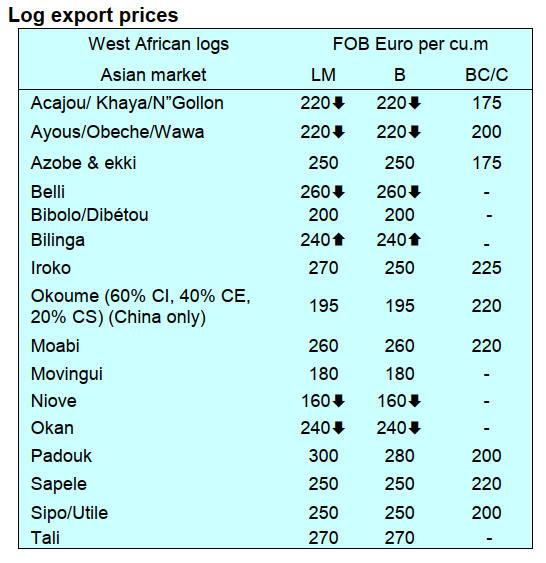
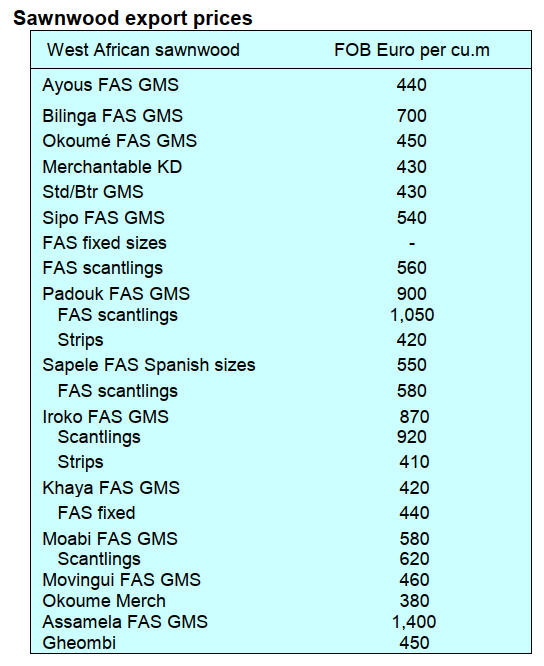
Timber prices remain generally stable with modest
increases seen for species for the Chinese market. The
supply of Azobé for Dutch and Belgian importers
continues to tighten.
During the 1960s through the 1990s, Azobé was harvested
extensively along the West African coastline, from Nigeria
through Cameroon and Gabon to the Republic of Congo.
Today, commercially available logs are increasingly
sourced from remote southern forest concessions where
transport is considerably more difficult and expensive.
Gabon
The dry season has now established itself across much of
Gabon. Cold winds are moving north from Southern
Africa. Gabon remains firmly in the dry season, with no
significant rainfall reported inland. Temperatures are
averaging between 26°C and 28°C and dry conditions are
expected to continue until late August or early September.
A lack of rain could become a concern for electricity
generation as lower water levels in the Ogooué and Mbei
rivers may further affect the country's already fragile
power supply.
Road transport has improved considerably with the
coming of the dry season. Timber from southern and
eastern production areas is now reaching Owendo Port in
approximately two days under normal operating
conditions.
The improved weather has enhanced harvesting conditions
allowing operations to recover steadily. Production of the
main commercial species including Okoumé, Okan, Azobé
and redwood species is gradually increasing as forest
access improves.
Buyers for the Chinese market continue to gradually return
to the market with renewed demand for Okoumé and
several redwood species. Demand is also strengthening for
Ovangkol, Okan and Sapelli providing welcome support
for Gabonese sawmills after a prolonged period of weak
purchasing activity.
Other export markets remain mixed. The Philippines
continues to reduce purchases while Viet Nam maintains
strong demand for Tali, Padouk and Niové. India is also
showing interest in Padouk and Tali.
Labour policy continues to evolve
The government continues to promote the replacement of
expatriate workers with local employees wherever
possible. Many companies employ Indonesian workers,
particularly in technical and operational roles but
authorities are encouraging increased recruitment and
training of Gabonese staff.
Infrastructure and Development
The government aims to proceed with major infrastructure
projects despite ongoing financial constraints. Electricity
supply remains one of Gabon's biggest operational
challenges.
Power shortages remain a major issue. Although no
significant power interruptions were reported during the
first weeks of July, the power company (SEEG) has
warned that electricity shortages could return if the current
dry weather continues and water levels decline.
The government recently attempted to regulate the sales
price of privately supplied water by imposing maximum
prices. However, following protests including from the
military, gendarmerie and fire services, the controls were
withdrawn.
Port Operations
Port operations at Owendo continue under normal
conditions. Container availability remains good and
transport to the port is operating efficiently. Vessels are
generally waiting only a few days before berthing with no
significant logistical disruptions reported.
Regulatory Developments
The implementation of new weighbridge infrastructure
continues to progress. The first weighbridge, located
approximately 80 kilometres from Libreville, has been
completed but remains inactive despite being operationally
ready. Construction has begun on a second weighbridge
while a third facility is planned near Mouila in southwest
Gabon. These projects are expected to strengthen transport
controls and improve monitoring of timber movements
across the country.
Administrative compliance
The government's forestry task force continues its
nationwide programme of inspections and tax
enforcement. Companies that have not fully settled land
tax obligations dating back to March 2026 continue to
negotiate payment by instalments, reflecting the financial
pressures created by higher export duties and difficult
market conditions.
Outlook
The outlook for the timber sector in the coming months is
cautiously positive. The dry season is supporting
harvesting and transport, while renewed Chinese demand
is helping improve market sentiment.
However, the sector continues to face structural
challenges, including electricity reliability, fiscal
pressures, increasing regulatory oversight and ongoing
adjustments to labour and transport policies.
Cameroon
Heavy rains slow harvesting operations
Cameroon is now firmly into its main rainy season, which
began at the end of June and is expected to continue until
early December. Heavy rainfall is slowing harvesting
operations and reducing timber transport from forest
concessions.
Prior to the onset of the rains, operators took advantage of
the dry season to repair forest roads and expand stocks.
Currently, Cameroon has little Okoumé available with its
main commercial species remaining Ayous, Sapelli, Sipo,
Iroko, Azobé and Okan.
International demand remains mixed
Demand in Middle East countries continues to provide
stable support for redwood species. Ayous demand
remains weak in Italy and the Netherlands while
Philippine demand continues at low levels. Vietnam
remains the strongest Asian market, with steady demand
for Tali and Padouk. European demand remains relatively
subdued, particularly for Padouk due to CITES
requirements while purchases of Okan, Sapelli and Sipo
continue at moderate levels.
Port operations and logistics
Container availability remains good, with no shortages
reported. Douala and Kribi Ports continue to operate
normally. Douala remains the principal gateway for
conventional sawn timber and log exports while Kribi
continues to expand its role in containerised timber
exports, including shipments originating from northern
Congo.
Infrastructure challenges
Electricity supply continues to present operational
challenges across Cameroon, similar to neighbouring
Gabon. Frequent power outages affect businesses and
households, prompting increasing numbers of private
homes and commercial buildings to install generators,
independent water boreholes and water storage systems.
The ageing utility infrastructure remains a significant
constraint, with limited investment in upgrading electricity
and water supply networks.
Timber stocks
Significant volumes of Azobé pointed square sections
intended for Belgium and the Netherlands remain stored in
Douala. Rather than shipping immediately to Antwerp
during the European winter season, importers are choosing
to hold inventories until demand strengthens.
European due diligence enforcement
An important development concerns enforcement of
timber due diligence requirements in Europe.
The Netherlands Food and Consumer Product Safety
Authority (NVWA) inspection authority has reportedly
issued warning letters and administrative fines to some
companies regarding shortcomings in documentation
required under the European Timber Regulation (EUTR).
The NVWA reported only 15 out of 47 inspected
companies met documentation and due diligence standards
in a recent operational period. This development
highlights the increasing emphasis on compliance and
documentation throughout the timber supply chain.
Outlook
The rainy season will continue to constrain harvesting and
transport during the coming months. However, export
logistics remain stable and Asian demand, particularly in
Vietnam and the Middle East, continues to support
producers.
Republic of the Congo
Seasonal weather conditions
Weather conditions continue to vary across the Republic
of the Congo. Northern production areas continue to
experience rainfall, while central and southern regions
benefit from favourable dry-season conditions that support
harvesting and transport activities.
Harvesting continues at a normal operational level
although production remains below capacity due to
relatively subdued demand in both Asian and European
markets. Congo's principal commercial species remain
Sapelli, Ayous, Iroko, Padouk, Azobé and in the southern
region, Okoumé.
Road transport continues under generally stable
conditions. Maintenance work on laterite roads is ongoing,
helping to maintain access despite seasonal weather
differences between the north and south.
Northern operators continue to use the transport corridor
to Douala in Cameroon which is considerably closer than
Pointe-Noire for concessions located near the border. For
operators in southern Congo, Pointe-Noire remains the
principal export gateway.
Port Operations
The Port of Pointe-Noire continues to operate normally
and is one of Central Africa's leading deep-water ports.
Ongoing expansion projects are expected to further
strengthen its position as a regional logistics hub. No
significant disruptions have been reported in container
availability, cargo handling or vessel operations.
Export Policy
The government's quota system for log exports remains in
place. Existing log inventories are also eligible for export
allowing companies to continue supplying international
markets while supporting domestic processing capacity.
Overall enquiry levels remain stable.
The Philippine market has stabilised for Okoumé sawn
timber while Vietnam continues to provide strong demand
for Tali, supporting sawmill production alongside selected
European orders.
Chinese buyers remain active for several key species,
including Okoumé, Okan, Ovangkol, Belli and Azobé
helping to maintain export activity despite generally
cautious global market conditions. Log inventories are
said to be ‘comfortable’, with sawmills holding
approximately two to three months of stock.
The Congolese forestry administration continues to
maintain strict oversight of forest operations and export
activities. No significant changes to forestry regulations or
administrative procedures have been reported during the
period.
Outlook
The international market outlook remains cautiously
stable. Demand in China continues to support exports of
several key hardwood species, while Vietnam remains an
important destination for Tali. European demand remains
selective but steady.
Weather conditions are expected to continue influencing
harvesting patterns between northern and southern Congo,
while the country's efficient port infrastructure and
established forest administration continue to support stable
export operations during the second half of 2026.
2.
GHANA
High electricity cost the top concern
A survey conducted in the first quarter of 2026 by the
Association of Ghana Industries (AGI) has revealed that
the high cost of electricity is the biggest challenge faced
by members of the Association.
The Association’s Business Barometer (AGI BB) report
published the top 5 major challenges identified in the Q1
2026 as follows;
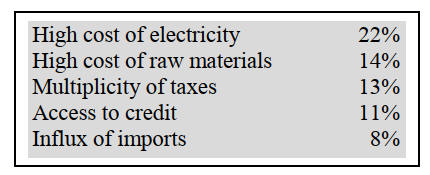
The high electricity cost maintained its lead in Q1 2026,
from 23% in Q4 of 2025 with multiplicity of taxes and
high cost of raw materials following
The AGI BB report on the 2026 Mid-Year Budget Review
found 51% of respondents were most worried about
economic stabilisation factors like inflation, exchange
rates and interest rates. Thirty-five percent wanted more
industry incentives, 10% prioritised faster road
construction and the remainder cited other issues.
The report concluded that business confidence remains
high but electricity costs and low priced imports persist.
Despite these challenges, industry leaders remain
optimistic, expecting stability and tax reforms to reduce
business costs.
The AGI is the leading private sector organisation in
Ghana, representing a diversity of 23 sectors with
membership currently over 2,000 - Manufacturing (44%),
Service (44%) and Construction (12%). It plays a pivotal
role of its members on government policies affecting their
operations.
Following a recent PURC tariff adjustment announcement,
the AGI criticised the timing and cautioned that the 3.5%
electricity tariff increase might raise production costs by
as much as 10%. Meanwhile, the Energy Ministry and the
AGI have indicated their commitment to work together to
drive energy sector reforms that will support the growth of
Ghana’s industrial sector.
See: https://agighana.org/the-agi-business-barometer-q1-2026/
and
https://www.myjoyonline.com/agi-warns-3-5-electricity-tariff-
hike-could-push-production-costs-up-by-10/
and
https://www.citinewsroom.com/2026/07/energy-ministry-and-
agi-deepen-collaboration-to-improve-business-operating-
environment/
Billet exports drop sharply
According to available data from the Timber Industry
Development Division (TIDD) of the Forestry
Commission, the value of Ghana’s total wood export trade
for the first four months (January to April) of the 2026
dropped by 14% and 20% in volume year-on-year.
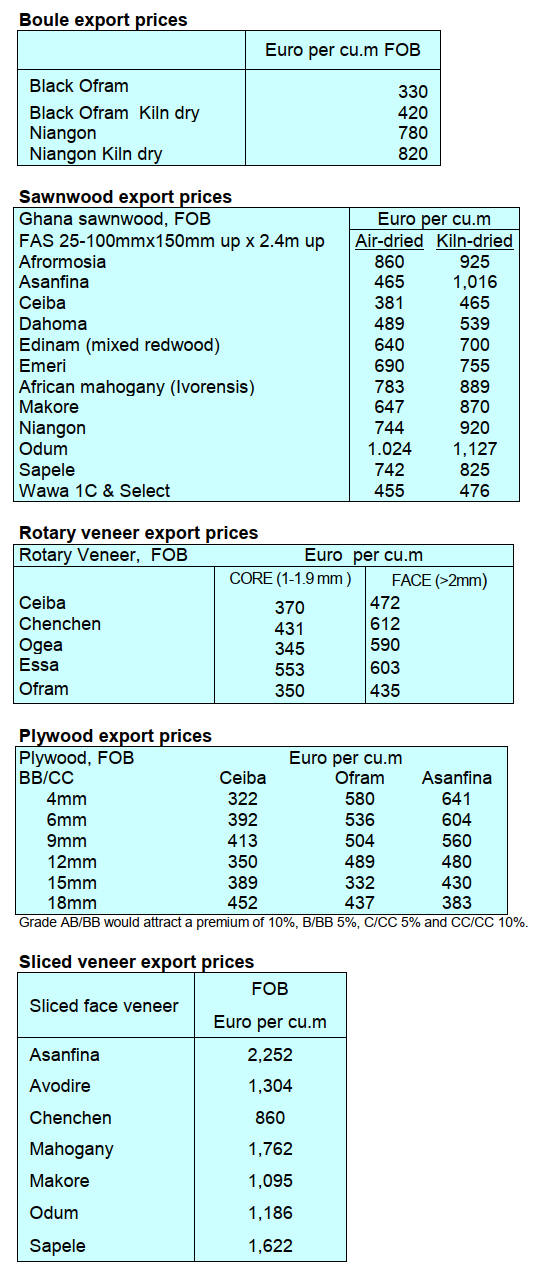
The table below shows the breakdown by product category
during the period in 2026 compared to 2025.
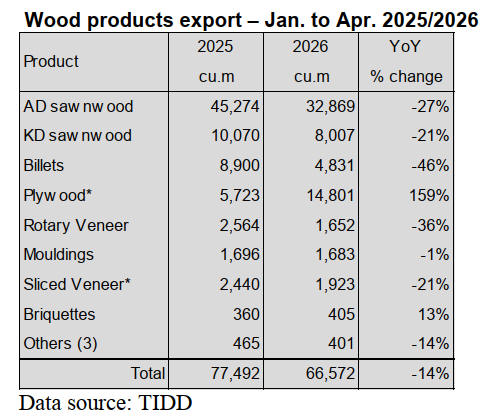
Billets accounted for 4,831cu.m. (7%) of the total export
volume for the period (66,572cu.m) to place fourth after
air-dried sawnwood, kiln-dried sawnwood and plywood.
The export volume of billets declined by 46% in the first
four months of 2026. The corresponding value for the
product also dropped from Eur2.72 million in 2025 to
Eur1.22 million in 2026.
Billets are one of Ghana’s primary wood products (PWP)
which together with air and kiln dry sawnwood, kindling,
air-dried boules and poles earned Eur12.80 million from
37,965 cu.m..
The figures indicated a decrease of 39% in value and a
decrease of 30% in volume as compared to the PWP
export figures for January-April, 2025.
Billets are the second leading wood product export to
Asia, particularly India and Bangladesh which accounted
for 92% (4,451cu.m) and 8% (380 cu.m) respectively of
the total export volume (4,831cu.m) in 2026. The main
billet species for export were teak and gmelina which
accounted for 4,154cu.m (86%) and 677cu.m. (14%)
respectfully in volume terms.
Ghana and UK make progress on forestry partnership
agreement
The Deputy Minister for Lands and Natural Resources,
Yusif Sulemana, has announced positive progress towards
the signing of the Ghana-United Kingdom Voluntary
Partnership Agreement (GH-UK VPA) following high-
level bilateral discussions held during the London Climate
Action Week.
Mr. Yusif disclosed that he met with Mary Creagh at the
Royal Botanic Gardens, Kew on the sidelines of the
climate event to discuss the proposed agreement between
Ghana and the United Kingdom. “The purpose of our
engagement was to draw attention to the need to sign the
Voluntary Partnership Agreement between Ghana and the
UK (GH-UK VPA), said Yusif.
See: https://www.myjoyonline.com/ghana-uk-move-closer-to-
signing-forestry-partnership-agreement-yusif-sulemana/
and
https://mlnr.gov.gh/forestry-commission-strengthens-forest-
governance-through-renewed-uk-ghana-partnership/
High Court dismisses injunction filed by SOAAG
The High Court has dismissed an injunction application
filed by the Ship Owners and Agents Association of
Ghana (SOAAG) and some shipping agents which sought
to block the Ghana Shippers’ Authority’s (GSA)
Regulatory Directive of 11May 2026 which caps the
Container Administrative Charge at GHS720 per Twenty-
Foot Equivalent Unit (TEU).
The Court ruled that the Directive had already taken effect
upon issuance and refused the injunction, noting that
granting it would hinder GSA’s statutory mandate. As a
result, the Directive remains valid and fully in force. The
GSA has therefore directed all Shipping Lines and Agents
to comply immediately with the GHS720 per TEU cap.
In July 2025, President John Mahama directed that all fees
and charges by shipping lines operating in Ghana not
backed by law as illegal and must be withdrawn. The
direction was part of Government’s measures to ease the
production cost of manufacturing companies and to reduce
the cost of doing business in Ghana to make them
competitive locally and internationally.
See: https://shippers.org.gh/
and
https://gna.org.gh/2026/07/court-dismisses-injunction-against-
implementation-of-gsa-administrative-charge-directive/
3. MALAYSIA
Indicators point to broadly resilient growth
Bank Negara Malaysia kept interest rates (overnight policy
rate, OPR) unchanged at 2.75%, extending its pause in
monetary policy after a 25 basis point cut in July 2025.
The move was widely anticipated. In a statement the Bank
said “at the current OPR level the Monetary Policy
Committee considers the monetary policy stance to be
appropriate and consistent with the outlook of continued
price stability and sustainable economic growth”.
The Bank said the latest indicators continue to point to
broadly resilient global growth, underpinned by robust
expansion in the technology sector, alongside improving
supply conditions and prices of key commodities. It said a
sustained de-escalation of the Middle East conflict would
further improve global supply chain conditions.
See: https://www.thestar.com.my/business/business-
news/2026/07/09/bank-negara-holds-opr-at-275-maintains-4-5-
growth-forecast
Furniture Council calls for industry-friendly policies
Against the backdrop of increasing global economic
uncertainty and rising business costs the Malaysian
furniture industry has renewed its call for stronger
government support and more industry-friendly policies to
strengthen the long-term competitiveness of one of
Malaysia’s key export industries.
Malaysian Furniture Council (MFC) President, Desmond
Tan Boon Hai, said the Malaysian furniture industry is
facing one of its most challenging periods as geopolitical
tensions, slowing global demand, uncertainties over
United States tariff policies and rising domestic operating
costs continue to impact business confidence.
While reaffirming MFC's support for the Government's
economic agenda, he urged policymakers to carefully
assess the impact of new measures on industry
competitiveness. Tan also stressed that a stable and
consistent foreign labour policy remains critical to the
industry's long-term growth.
Responding to the industry’s concerns, Deputy Minister of
Investment, Trade and Industry, Sim Tze Tzin, reaffirmed
the Government’s continued commitment to supporting
the growth and development of Malaysia’s furniture
industry.
He announced that the Government has, in principle,
approved several strategic measures, including inviting
Malaysian furniture companies to participate in the
MADANI Digital Trade Platform to facilitate international
market expansion; establishing a Furniture Industry Hub
within the Muar Furniture Industrial Park and forming a
special task force to address unfair competition from
imported products and illegal business activities, thereby
creating a more level playing field for legitimate local
businesses.
See: https://www.mfc.my/post/2026-mfc-master-luban-dinner-
strengthens-industry-unity
Community participation central to Sarawak’s
conservation strategy
Sarawak has gazetted more than 879,000 hectares of
Totally Protected Areas (TPAs) and is steadily progressing
towards its target of one million hectares, according to the
Sarawak Forestry Corporation (SFC). The TPAs,
comprising national parks, nature reserves and wildlife
sanctuaries extend over 71 protected areas across the State.
SFC General Manager, Abang Arabi Abang Aimran,
stressed that community participation remains central to
Sarawak’s conservation strategy, noting that one of the
key objectives of establishing TPAs is to ensure nearby
communities benefit from the initiative. Under the
National Parks and Nature Reserves Ordinance, local
communities are permitted to utilise resources within
national parks and protected areas for their own use, in
accordance with existing regulations.
He further revealed that several new locations are being
considered for gazetting as national parks. Among the
proposed sites are Ulu Keluan in Ulu Baram, known for its
Three Sisters Waterfall attraction and Sebangkoi Nature
Reserve in Sarikei.
See: https://www.theborneopost.com/2026/07/05/sarawak-
gazettes-over-879000-ha-of-protected-areas-nearing-1-mln-ha-
target/
Carving out a digital future in marketing
The Malaysian timber industry is carving out a new digital
future with the successful completion of the AI Revolution
in Timber and Furniture Marketing Workshop. This
intensive two-day programme, held in Kuala Lumpur, was
specifically designed to move the industry beyond
traditional methods into the era of high-efficiency digital
marketing.
The Malaysian Timber Industries Board (MTIB)
workshop brought together 40 participants, including
representatives from various timber companies and MTIB
officers to learn how modern technology can simplify
complex marketing tasks.
Rather than focusing on complex coding the programme
highlighted accessible tools that are already available in
Malaysia, ensuring that participants are able to apply their
new skills immediately. Key areas of the hands-on training
were:
Smart Content Creation. Participants learned to use
writing assistants to craft compelling product narratives
that highlight the unique qualities of Malaysian timber,
significantly reducing the time spent on brochures and
social media captions.
Professional Visual Design. Using advanced design
platforms attendees discovered how to create high-quality
social media banners and product flyers without needing a
background in graphic design.
Precision Advertising. The session explored how
intelligent tools within Google and Meta can find specific
customer segments most likely to be interested in timber
products, ensuring a better return on every marketing
dollar spent.
Data-Driven Decisions. Participants were shown how to
turn website traffic and customer feedback into actionable
insights, moving away from guesswork towards strategic
planning.
Strengthening National Competitiveness. The true value of
the workshop was in its long-term impact on the industry.
Not only did the participants embrace theoretical
knowledge, they received an actionable marketing plan
tailored to their specific business goals and a ready-to-use
toolkit of templates and resources.
See: https://www.mtib.gov.my/en/maskayu/category/49-
emaskayu-2026.html
4.
INDONESIA
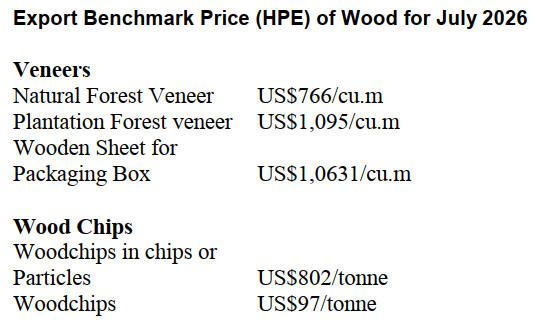
Processed Wood
Processed wood products which are leveled on all four
sides so that the surface becomes even and smooth with
the provisions of a cross-sectional area of 1,000 sq. mm to
4,000 sq.mm (ex 4407.11.00 to ex 4407.99.90)
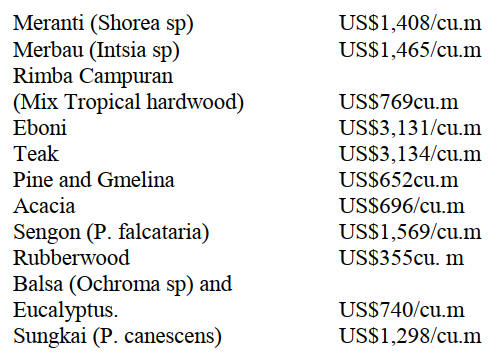
Processed wood products which are leveled on all four
sides so that the surface becomes even and smooth of
Merbau wood with the provisions of a cross-sectional area
of 4,000 sq.mm to 10,000sq. mm (ex 4407.11.00 to ex
4407.99.90) = US$1,500/cu.m.
See: https://jdih.kemendag.go.id/peraturan/keputusan-menteri-
perdagangan-republik-indonesia-nomor-1502-tahun-2026-
tentang-harga-patokan-ekspor-dan-harga-referensi-atas-produk-
pertanian-dan-kehutanan-yang-dikenakan-bea-keluar-dan-tarif-
layanan-badan-layanan-umum
Ministry of Forestry- some forestry concession holders
not performing
Indonesia's Ministry of Forestry estimates that around 30%
of forestry concession holders are underperforming as the
sector's competitiveness declines due to its heavy
dependence on timber production alone. Director General
of Sustainable Forest Management, Laksmi Wijayanti,
said the traditional timber-focused business model is
facing lower efficiency, stagnant growth in natural forest
wood products and declining investment in silviculture.
She noted that forest concessions continue to rely on a
single-use management approach while the economic
potential of non-timber forest products and environmental
services remains largely untapped because of limited
market development and insufficient incentives.
To improve the sector's performance the government is
accelerating the implementation of a multi-business
forestry scheme that allows concession holders to diversify
income through non-timber forest products, agroforestry,
nature-based tourism, environmental services and carbon
trading. Agroforestry is expected to become a key pillar
of the initiative by combining forest conservation with
economic development and supporting food security.
The Ministry is also preparing regulatory simplification,
streamlined licensing, expanded market access and
incentives such as lower fee rates, certification support and
market assistance to encourage wider adoption of the new
business model.
See: https://www.antaranews.com/berita/5623347/kemenhut-
sekitar-30-persen-konsesi-kehutanan-belum-berkinerja-
optimal?utm_source=antaranews&utm_medium=desktop&utm_
campaign=popular_right
APKINDO urges ‘Green Workforce Roadmap’ should
support competitiveness
The Indonesian Wood Panel Association (APKINDO) has
called on the government to ensure that Indonesia's
planned ‘Green Workforce Roadmap’ is implemented in a
manner that strengthens, rather than burdens, the country's
wood industry.
Speaking during a public consultation on the draft
Presidential Regulation, the Association emphasised that
the wood panel sector has already adopted sustainability
standards through the Timber Legality and Sustainability
Verification System (SVLK) and sustainable forest
management.
APKINDO urged the government to align the new ‘green
workforce’ policies with existing systems, avoid
duplicative certification requirements and prioritise
industry-relevant skills such as energy efficiency, timber
supply chain traceability, hazardous waste management
and renewable product development.
The consultation also highlighted the importance of
effective policy implementation, including monitoring,
public outreach and cross-sector coordination.
Participants recommended integrating green skills into
vocational education, expanding training programmes to
production centres outside Java, simplifying competency
certification and strengthening the role of regional
governments.
APKINDO also called for vocational incentives, funding
for green skills curricula, improved regional training
facilities and policy alignment with forestry and
international trade regulations to help Indonesia's wood
industry meet rising global sustainability standards while
maintaining its export competitiveness.
See: https://www.apkindo.org/berita/detail/apkindo-minta-peta-
jalan-tenaga-kerja-hijau-selaras-dengan-daya-saing-industri-
kayu-nasional
Forest revitalisation to strengthen sustainability
Indonesia's Ministry of Forestry is advancing the
revitalisation of natural and plantation forests to improve
the competitiveness of the forestry sector while supporting
the Indonesia's FOLU Net Sink 2030 target.
Secretary General, Mahfudz, said the initiative should
become a national agenda to promote a more productive,
inclusive and sustainable forestry governance system.
He emphasised that forest revitalisation is intended not
only to increase productivity but also to deliver balanced
economic, social and environmental benefits while
addressing declining forest productivity, ensuring
industrial raw material supplies and fulfilling Indonesia's
climate commitments.
APHI Chairman, Soewarso, said the forestry sector must
diversify its revenue sources by maximising
environmental services, carbon, biodiversity and non-
timber forest products while addressing persistent
challenges such as high production costs, land tenure
conflicts, concession uncertainty and limited value-added
processing.
The Ministry estimates that the new approach could
generate economic value up to 10 times greater than
conventional timber-based business models. Director
General of Sustainable Forest Management, Laksmi
Wijayanti, said the policy is aimed at addressing the low
economic competitiveness of forests which has historically
made them less attractive than other land uses.
See: https://forestinsights.id/revitalisasi-hutan-alam-dan-hutan-
tanaman-perkuat-arah-baru-kehutanan-berkelanjutan/
and
https://www.kehutanan.go.id/news/kementerian-kehutanan-
perkuat-revitalisasi-hutan-alam-dan-hutan-tanaman-dukung-
pertumbuhan-ekonomi-nasional
and
https://en.antaranews.com/news/420491/indonesia-pushes-multi-
enterprise-forestry-to-boost-economic-value
Community partnerships in forest concessions
Indonesia's Ministry of Forestry is promoting community
partnerships in approximately 29 million hectares of forest
concession areas to ensure local communities benefit more
directly from forest management.
Director General of Sustainable Forest Management,
Laksmi Wijayanti, said the initiative will be carried out
through the Multi-Business Forestry (MUK) scheme and
mandatory community partnerships. The policy aims to
expand community participation in forest-based economic
activities and create a more equitable distribution of
benefits from concession management.
The government expects the partnership model to promote
more inclusive forest governance, strengthen cooperation
between concession holders and local communities and
improve rural livelihoods. According to Laksmi, several
companies that have adopted the scheme have already
allocated around 100,000 hectares of concession land for
community partnerships.
See: https://www.antaranews.com/berita/5623251/kemenhut-
dorong-kemitraan-masyarakat-di-29-juta-hektare-konsesi-
hutan?page=all
Indonesia as global carbon trading hub
The Ministry of Forestry has launched the Indonesia
Forest Carbon Hub to support the country's ambition of
becoming a global carbon trading hub. Forestry Minister.
Raja Juli Antoni, said the initiative will serve as a key
pillar in building a credible, high-integrity carbon market
through collaboration with international partners.
To strengthen market demand, the government has
partnered with the International Emissions Trading
Association (IETA), whose global corporate members are
expected to help expand Indonesia's role in international
carbon trading.
To ensure the integrity of its carbon market, Indonesia is
also working with the Integrity Council for the Voluntary
Carbon Market (ICVCM) to align carbon measurement,
accounting and leakage prevention with international
standards.
In addition, the country has joined the Coalition to Grow
Carbon Markets and signed a cooperation agreement with
Emergent to develop a jurisdictional carbon market,
enabling greater participation by regional governments
and further strengthening Indonesia's position in the global
carbon market.
See: https://www.antaranews.com/berita/5637133/indonesia-
forest-carbon-hub-jadikan-ri-pusat-perdagangan-karbon-global
and
https://forestinsights.id/indonesia-forestry-carbon-hub-resmi-
diluncurkan-perdagangan-karbon-kehutanan-masuki-babak-baru/
Innovative conservation financing promoted
Indonesia is promoting an innovative conservation
financing model to reduce reliance on public funding
while attracting high-integrity private investment.
Speaking in London, Forestry Minister, Raja Juli Antoni,
said the country is introducing a new paradigm for
conservation management that aims to make national
parks financially self-sustaining, increase community
participation and strengthen private sector involvement
under a transparent and accountable regulatory framework.
To support this goal, the government has established an
innovative financing task force for 13 national parks and
two conservation landscapes for iconic species, targeting
financial independence by 2030.
The strategy combines regulatory reform, institutional
strengthening and private investment through mechanisms
such as carbon credits, biodiversity credits, conservation
bonds, ecotourism, bioprospecting, non-timber forest
products and public-private partnerships. Antoni said the
approach is intended to improve conservation outcomes
while creating economic opportunities for communities
living around protected areas.
In related news, the Ministry of Forestry and Emergent
Forest Finance Accelerator, Inc. are exploring a
partnership to support emissions reduction in the forestry
sector through Jurisdictional REDD+ (JREDD+)
financing. A memorandum of understanding signed during
London Climate Action Week 2026 marks both parties'
commitment to advancing discussions on mobilising
international climate finance to help Indonesia achieve its
climate targets while strengthening sustainable forest
management and improving local livelihoods.
The cooperation will explore the use of verified emissions
reductions generated through the Forest Carbon
Partnership Facility (FCPF), alongside opportunities for
results-based payments and other high-integrity climate
financing mechanisms.
See: https://rri.co.id/en/environment/2521945/minister-
indonesia-moves-from-conventional-conservation-to-nature-
based-finance
and
https://www.antaranews.com/berita/5624071/kemenhut-
emergent-jajaki-kerja-sama-pendanaan-iklim-dan-kehutanan
and
https://www.kehutanan.go.id/news/kemenhut-dan-emergent-
sepakati-penjajakan-kerja-sama-pendanaan-iklim-untuk-
kehutanan-indonesia
Expanding partnerships to restore mangrove forests
Indonesia is expanding international cooperation to
accelerate the rehabilitation and sustainable management
of its mangrove forests, recognising their critical role in
climate mitigation, biodiversity conservation and coastal
resilience.
Led by the Ministry of Forestry's Directorate General of
Watershed Management and Forest Rehabilitation, the
initiative seeks to attract international investment and
technical support to address the significant funding needs
for mangrove restoration.
A key component of the effort is the Forest Programme
(FP) VI, a bilateral partnership with Germany supported
by KfW Development Bank, which promotes mangrove
conservation, restoration, pilot projects, community
engagement and governance across four priority
provinces, including North Kalimantan.
Indonesia is also receiving support from the World Bank's
Mangroves for Coastal Resilience (M4CR) programme
and climate financing under the FOLU Net Sink initiative
with contributions from Norway, further strengthening the
country's long-term mangrove recovery efforts.
See: https://rri.co.id/voice-of-
indonesia/international/2542892/indonesia-expands-global-
partnerships-to-restore-mangrove-forests
5.
MYANMAR
6.
INDIA
India/UK FTA entered into force 15 July
The Minister of Commerce and Industry, Piyush Goyal,
has been reported as saying despite the West Asia conflict
Indian exports rose nearly 15% during the first two and
half months of the current financial year sustaining the
momentum seen during April.
Aided by strong oil exports in the wake of high prices for
crude and petroleum products exports have seen a strong
growth driven by the trade agreements being signed.
The UK/India free trade (FTA) agreement came into force
on 15 July. Now, with almost zero duty, almost the entire
Europe market will soon be open for India as a FTA will
be signed with the EU in December and will be effective
in early 2027. Goyal said that next in line is the US trade
deal.
The additional tariffs of 10% imposed by the US
administration after the earlier “reciprocal tariffs”, were
deemed illegal by the US Supreme Court are due to expire
next month and a deal is expected to help roll out the new
tariffs which are likely to be based on section 301
investigations launched by USTR against India.
Goyal indicated that the Canadian Prime Minister
indicated his government’s keenness to conclude talks for
a bilateral trade deal this year. Also, Kenya has shown an
interest in a FTA with India and the government is
expected to soon start talks with the South African
Customs Union for a trade agreement.
See: https://timesofindia.indiatimes.com/business/india-
business/goods-exports-up-15-in-2-and-half-months-of-2026-
27/articleshow/131899214.cmsSource: Times Business News
Plywood industry battles a severe raw material deficit
The plywood industry in East and North-East India battles
a severe raw material deficit caused by strict logging bans,
inadequate local agro-forestry plantations, challenging
logistics and a reliance on imported timbers, all of which
continue to challenge manufacturing capacity and growth.
These challenges were recently discussed during a Kolkata
exhibition here participants were invited present their
perspective to find a solution to the many challenges faced
by the plywood industry.
In his opening remarks at the panel, Dr. Bishnu Prasad
Sahoo, a scientist from the Indian Council of Forestry
Research and Education (ICFRE), said that there are over
300 plywood manufacturing units in West Bengal, Bihar,
Odisha and North Eastern State.
Over 85% units come in medium and small enterprises
which are chiefly faced with the challenges of inadequate
supply of timber and raw material.
Another participant said logistics has been one of the most
pressing problems in the North East region despite
improved accessibility over recent years. Also, there is a
long monsoon season in the North East which interrupts
harvesting and production.
In related news, it has been reported that many new
species are being examined for plantations alongside
conventional poplar logs from Uttar Pradesh, Haryana,
Western States and also from Nepal and Viet Nam.
There are two new species that have been tried Semal
(cotton tree) and Kadam (Neolamarckia cadamba) which
are said to be prone to termite attack. Until a viable
altenative is found plymills will have to rely on Poplar
from Uttar Pradesh and Haryana. A participant said “to
improve the profit margins and contain input cost the
plantation experts and industry needs to look beyond
Semal and KIadam, cultivation and introduce species like
Poplar and Eculayptus in Bihar”.
See: https://www.plyreporter.com/magazine-April-2026
Concerns that housing cycle has plateaued misplaced
India's real estate growth cycle is far from over, with listed
developers set for another year of strong growth as new
project launches pick up and homebuyers continue to
favour branded players, according to Vijay Agrawal,
Managing Director at Equirus Capital.
Agrawal said concerns that the housing cycle has started to
plateau are misplaced. Developers had delayed launches in
calendar year 2025 because of broader market conditions
but those projects are now coming to market, supporting
strong pre-sales and improving visibility for the sector.
See: https://www.cnbctv18.com/market/raymond-realty-godrej-
properties-prestige-estates-dlf-real-estate-equirus-capital-
19939331.htm
Monsoon delivers good news
India recorded an 11% surplus rain in first week of July.
The southwest monsoon has revived sharply, pushing
India into a rainfall surplus in early July. The active spell
is expected to bring heavy rain to several states while
supporting kharif sowing and reservoir levels.
After a sluggish and erratic start, the southwest monsoon
has made a remarkable comeback, pushing India into an
overall rainfall surplus for the first week of July.
See: https://www.indiatoday.in/science/story/monsoon-shifts-
gears-india-records-11-surplus-rains-in-first-week-of-july-
2941407-2026-07-06
7.
VIETNAM
Wood and wood product (W&WP) trade
highlights
W&WP exports in June 2026 earned US$1.53 billion, up
6% compared to May 2026 and up 12% compared to June
2025. WP exports alone were valued at US$942 million,
up 2% compared to May 2026 and up 1% compared to
June 2025. In the first 6 months of 2026, W&WP exports
earned US$8.55 billion, up 4% over the same period in
2025, of which WP exports contributed US$5.45 billion,
down 3% over the same period in 2025.
According to statistics provided by Viet Nam Customs,
Viet Nam's W&WP exports to Korea in June 2026 reached
US$60 million, up 8% compared to May 2026 and up 9%
compared to June 2025. In the first half of 2026, W&WP
exports to Korea amounted to US$323 million, down 13%
over the same period in 2025.
Imports of raw wood (logs and sawnwood) from the US to
Viet Nam in June 2026 stood at 185,000 cu.m, with a
value of US$81.1 million, up 5% in volume but down 1%
in value compared to May 2026 and up 8% in volume and
10% in value over the same period in 2025. In the first 6
months of 2026 imports of raw wood from the US are
estimated at 908,700 cu.m, with a value of US$398.4
million, up 54% in volume and 63% in value over the
same period in 2025.
Viet Nam’s W&WP exports to the Chinese market in June
2026 reached US$224 million, up 34% compared to June
2025. In the first 6 months of 2026, exports of wood and
wood products to the Chinese market earned US$1.28
billion, up 46% over the same period in 2025.
Exports of living and dining room furniture in June 2026
reached US$219 million, up 9% compared to June 2025.
In the first 6 months of 2026 exports of living and dining
room furniture earned US$1.2 billion, down 63% over the
same period in 2025.
New decree lays legal foundation for Viet Nam's forest
carbon market
A new Government decree regulating forest carbon
sequestration and storage services will establish a unified
legal framework for forest carbon credits, laying the
groundwork for national standards and a transparent
carbon market that supports Vi?t Nam's emissions
reduction commitments, forestry officials said on
Thursday.
Speaking at a conference introducing the Government’s
Decree 180/2026/N?-CP on forest carbon sequestration
and storage services as well as a draft National Standard
for Forest Carbon Credits on Thursday, Ph?m H?ng
L??ng, deputy director of the Department of Forestry and
Forest Protection, described the decree as a milestone for
carrying out the Forestry Law and developing a domestic
forest carbon market.
Issued on 21 May, the decree will took effect on 15 July. It
comprises four chapters, 20 articles and six appendices
detailing project documentation, methods for allocating
emissions reduction targets, contract templates and
financial management requirements.
“The decree creates a comprehensive legal basis for forest
carbon services and provides a clear framework for
generating, managing and trading forest carbon credits in
Vi?t Nam", L??ng said.
He noted that the country has gradually developed its
forest environmental services policy over nearly two
decades. Pilot payments for forest environmental services
began in 2008, followed by a Government decree in 2010
establishing the payment mechanism. The 2017 Forestry
Law subsequently recognised forest carbon sequestration
and storage as one of the five legally defined forest
environmental services.
The ministry will oversee the development of national
standards, certify emissions reduction results and manage
forestry sector mitigation targets, while provincial People's
Committees will be responsible for implementing projects,
managing local databases and submitting periodic reports.
Officials said the new legal framework is expected to
gradually establish a transparent and efficient forest
carbon market, mobilising additional financial resources
for forest protection and sustainable development,
improving local livelihoods and supporting Vi?t Nam's
goal of achieving net zero emissions by 2050.
See: https://vietnamnews.vn/environment/1784683/new-decree-
lays-legal-foundation-for-viet-nam-s-forest-carbon-market.html
In related news, the Ministry of Finance (MoF) and the
Ministry of Agriculture and Environment (MAE) have
officially launched Viet Nam's domestic carbon exchange,
marking a major milestone in the country's efforts to
establish a carbon market. Beyond supporting Viet Nam's
goal of achieving net-zero emissions by 2050, the
exchange provides businesses with a mechanism to
proactively manage emissions by trading emission
allowances and carbon credits.
Nguyen Tuan Quang, Deputy Director of the MAE’s
Department of Climate Change, said the market's technical
infrastructure comprises three key components: the
national registry for greenhouse gas emission allowances
and carbon credits, the carbon trading platform and the
repository and settlement system.
Alongside infrastructure development, the Government
has approved a pilot greenhouse gas emission allowance
cap for the 2025–2026 period and allocated more than 511
million tonnes of CO2 equivalent to 110 facilities. This
forms the initial supply for Viet Nam's domestic carbon
market.
Experts say the launch of the trading platform is only the
first step. The long-term success of the market will depend
on a transparent system backed by robust measurement,
reporting and verification (MRV) standards to ensure
every transaction reflects genuine emissions reductions.
According to Tran Duc Phu of the Foreign Trade
University, Viet Nam currently has around 116 carbon
projects at various stages of development, including 40
that have already been certified, with annual carbon credit
issuance estimated at about 10.7 million credits. However,
most of these credits are still sold to international buyers,
while improvements are needed in the MRV system and
benefit-sharing mechanisms to strengthen investor
confidence.
From the business perspective, Doan Hong Nhung of the
University of Law under the Viet Nam National
University, Hanoi, said complex MRV requirements,
limited digital infrastructure and an incomplete carbon
credit database have increased compliance costs,
particularly for small and medium-sized enterprises. She
called for standardisd MRV procedures, a centralised
carbon registry, measures to prevent double counting of
credits and stronger incentives such as green finance and
tax preferences.
Meanwhile, Phan Duy Hoa of the Foreign Trade
University noted that carbon credits have yet to be clearly
recognized as property rights under Viet Namese law,
making it difficult for businesses to transfer, account for or
use them as collateral to access green financing.
Establishing a clear legal status for carbon credits, he said,
will help unlock the market's full potential.
As climate-related trade measures such as the EU's Carbon
Border Adjustment Mechanism (CBAM) increasingly
affect exports, a transparent domestic carbon market
supported by verified emissions data will help businesses
adapt, reduce compliance costs and enhance
competitiveness. Without transparency and market
confidence, however, carbon trading risks becoming a
transactional exercise rather than an effective driver of real
emissions reductions.
See: https://Viet Namnet.vn/en/Viet Nam-lays-groundwork-for-
transparent-carbon-market-2533605.html
Harvest cycles have extended from five years to a
decade or more
Once harvested early to survive price swings, forests in
Viet Nam are now being cultivated over decades, as global
Environmental, Social and Governance ESG rules
transform timber into one of the country’s most durable
exports. As ESG standards develop into requirements
across international supply chains, forestry has emerged as
one of Vi?t Nam’s most promising points of alignment.
Rather than simply purchasing timber, several companies
now pay the full cost of certification, from land surveys
and management plans to international audits, without
requiring growers to sell exclusively to them. Forest
owners retain full freedom to choose buyers, a condition
that has helped build trust and widespread participation.
The impact is visible at the village level. In Ngh?a Tá
Commune, where every household owns forest land,
growers once sold small-diameter logs to traders at
volatile prices.
Harvest cycles have extended from five years to a decade
or more but yields tell the story. Certified acacia forests
now produce timber with diameters exceeding 20
centimetres, attracting prices two to three times higher
than previous models. For many rural households, large-
timber forestry has become a form of long-term savings
rather than subsistence income.
The lesson emerging across Viet Nam is a simple one:
sustainable forestry cannot rest on smallholders alone. It
requires capital, technical expertise and market access,
roles increasingly filled by private enterprises alongside
State planning and local stewardship. From forests once
sold as raw logs, Viet Nam is now building internationally
recognised 'green assets' and as ESG reshapes global trade,
those forests may prove to be among the country’s most
durable exports.
See: https://VietNamnews.vn/environment/1765321/from-quick-
harvests-to-long-horizons-how-esg-is-reshaping-viet-nam-s-
forests.html
Speeding up forest boundary maps to support
compliance with EUDR
Viet Nam is speeding up the development of a 2020 forest
boundary map to help exporters comply with the European
Union Deforestation Regulation (EUDR) and reduce risks
for key export sectors such as coffee, rubber and timber
when accessing the EU market.
At a webinar organised on 29 May by the Forestry EUDR
Network, Truong Tat Do from the Forestry and Forest
Protection Department under the Ministry of Agriculture
and Environment said the core requirement of the EUDR
is that commodities placed on the EU market must not be
linked to deforestation.
To demonstrate compliance, producers must first provide
the geographical coordinates of production plots and
compare them against a 2020 forest boundary map to
determine whether the area is associated with
deforestation, Do said.
He noted that because the EUDR uses December 31, 2020,
as its reference date, maps created after that point cannot
serve as the basis for compliance assessments. Any change
in forest status after the cut-off date could be considered a
violation, even if land-use conversion was authorised by
competent authorities.
To address the issue, Viet Nam is developing a forest
boundary dataset that combines multiple sources,
including provincial forest-status maps in 2020, remote-
sensing data, multi-temporal satellite imagery and
international reference datasets such as UMD/GLAD and
the European Commission’s Joint Research Centre (JRC).
Data from 13 provinces that have completed reviews show
that green areas account for about 54% of the mapped
area, yellow areas 45% and red areas 0.8%. Local
authorities have already conducted field verifications for
all red-zone locations.
The Forestry and Forest Protection Department will
publish Version 1.0 of the map on its website after
receiving review results from all 34 participating
provinces and cities. The database will remain open for
further updates, following a model similar to that used by
the EU’s JRC, with the aim of improving accuracy and
reliability in subsequent versions. To-date, 19 of the 34
provinces and cities have submitted complete datasets
while the remaining localities are continuing verification
before finalising submissions.
Experts pointed out that the biggest challenge is the lack
of 2020 forest-status data in some localities, beside uneven
technical capacity and concerns over discrepancies with
previously published map. Experts warned that EUDR-
related risks remain relatively high for products such as
coffee, rubber and timber, particularly in the Central
Highlands, underscoring the need for further data
verification.
Ministry of Agriculture and Environment officials said the
EU is expected to establish a legal data repository for
EUDR implementation in June 2026. Viet Nam’s forest
boundary map could be integrated into that system
alongside relevant land, forestry and traceability
regulations.
If Viet Nam succeeds in building a scientifically robust,
regularly updated and locally verified dataset, it could
significantly reduce compliance risks for exporters while
strengthening the country’s data governance capacity and
ability to adapt to increasingly stringent global
sustainability standards, experts said.
See: https://vietnamnews.vn/economy/1782432/vn-speeds-up-
2020-forest-map-to-support-compliance-with-eudr.html
Digital technology helps sustain export
competitiveness
With support from regulators and industry experts,
Vietnamese exporters are expected to boost
competitiveness and turn trade barriers and market
volatility into opportunities for sustainable growth.
As global markets tighten technical standards, raise
logistics costs and accelerate green transition
requirements, Vietnamese exporters are coming under
mounting pressure to upgrade supply chains and improve
competitiveness.
Rising logistics costs, stricter technical barriers and
tougher environmental standards are forcing a structural
shift in how Vietnamese exporters operate, with supply
chain standardisation and digitalisation becoming essential
to remain competitive in global markets.
Beyond stricter standards, many export industries are also
grappling with prolonged market dependence. Despite
rapid export growth, diversification has lagged, leaving
businesses exposed to concentration risks. Amid rising
trade protectionism and tighter technical regulations
worldwide, the strategy of putting too many eggs in one
basket is becoming increasingly risky.
Logistics is another major pressure point. According to
Vi?t Nam’s Trade Office in Argentina, in late May 2026,
rising freight costs have become one of the biggest threats
to the competitiveness of Vietnamese goods exported to
Argentina and the wider South American market.
Shipping costs from Asia to South America have risen
sharply due to long distances and extended transit times.
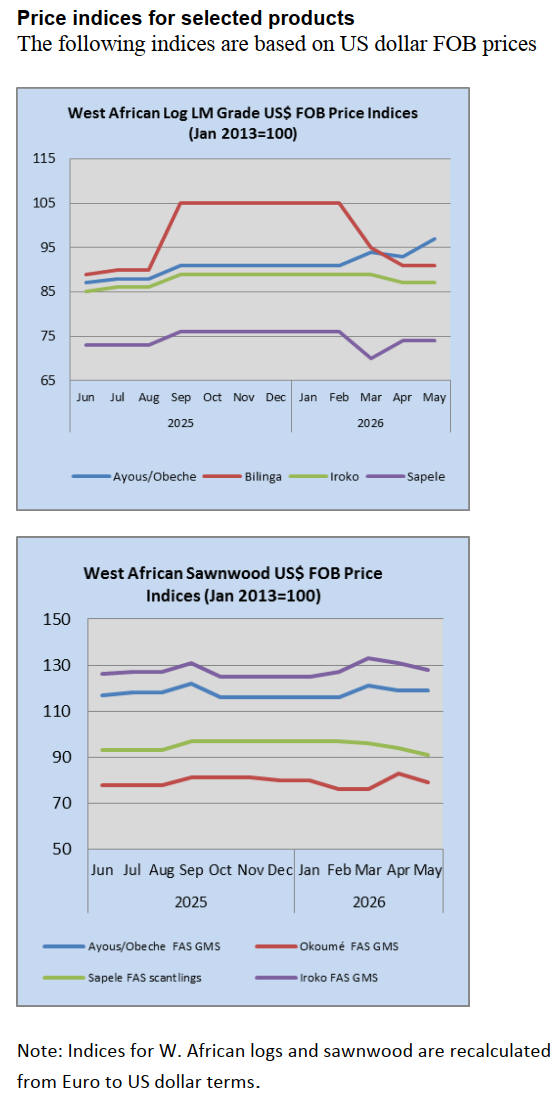
International logistics firms estimate that total container
shipping costs to South America have increased by 50–
80% compared to pre-Red Sea crisis levels. Some 40-foot
container routes have seen rises of several thousand US
dollars per container.
Viet Namese enterprises face not only risks linked to
freight costs and exchange rate fluctuations but also
growing pressure to comply with new international
standards warning that companies without effective risk
management systems and supply chain optimisation
strategies could see profit margins eroded by rising
compliance costs.
In response, many exporters have begun restructuring
operations and shifting from passive production models to
proactive supply chain optimisation, from sourcing
materials to manufacturing, packaging and transport.
Experts said the green transition and supply chain
upgrading process requires substantial financial and
technical resources, making stronger policy support
essential, particularly for small- and medium-sized
enterprises.
The ministry will also strengthen training programmes on
risk management and coordinate with financial institutions
to help businesses access preferential financing for
production modernisation and compliance with
international standards.
See: https://vietnamnews.vn/economy/1782649/digital-
technology-helps-sustain-export-competitiveness.html
8. BRAZIL
BNDES Florestas expands investments in
forestry
sector
The Brazilian Development Bank (BNDES) recently
announced that its “BNDES Florestas” strategy has
already mobilised BRL14.1 billion for Brazil’s forestry
sector, supporting initiatives focused on ecological
restoration, the bio-economy, forest conservation and the
sustainable use of forest resources.
Of this total, BRL8.2 billion has been allocated through
financing operations, while BRL5.9 billion has been
directed to equity investments and other financial
instruments aimed at conservation and the sustainable
management of natural resources across all Brazilian
biomes, including the Amazon, Cerrado, Atlantic Forest,
Caatinga, Pantanal, Pampas and coastal and marine
ecosystems.
According to BNDES, these investments have already
supported the planting of 342 million trees, the restoration
of 205,000 hectares of degraded land, the creation of
86,000 ‘green’ jobs and the potential sequestration of 66
million tonnes of carbon. The strategy combines a range of
financial instruments, including credit facilities, non-
reimbursable funding, equity investments, forest
concessions, carbon market initiatives, innovation and
technical assistance to promote the sustainable
development of Brazil’s forestry sector.
See: https://apreflorestas.com.br/noticias/bndes-florestas-
mobiliza-r-141-bilhoes-para-restauracao-e-bioeconomia/
Mato Grosso plans to expand planted forests
The Government of the State of Mato Grosso and the State
Public Prosecutor’s Office (MPE) signed an
Environmental Commitment Agreement on 8 June 2026,
establishing the Mato Grosso Forest Development Plan.
The initiative aims to strengthen the transition to
sustainable sources of raw material, particularly
eucalyptus and teak. The plan sets long-term targets to
expand the state´s renewable forest resource base while
strengthening the competitiveness of the forestry sector.
The plan includes targets to expand planted forest areas to
more than 700,000 hectares and increase the area under
sustainable forest management to at least 6.5 million
hectares by 2040.
The plan establishes a gradual transition away from timber
sourced through authourised forest clearing toward raw
materials supplied by planted forests, sustainable forest
management and other renewable sources. Under the
established timeline, major biomass consumers are
expected to complete this transition by 2034.
The plan also provides for the implementation of forest
raw material traceability systems, continuous monitoring
of Sustainable Supply Plans (PSS), independent audits and
greater transparency of environmental information.
According to the State government and the State
Secretariat for the Environment (SEMA), the initiative is
intended to encourage reforestation, provide greater
security for the expansion of forest-based industry and
promote sustainable economic development in the state of
Mato Grosso.
See: https://apreflorestas.com.br/noticias/mato-grosso-assina-
plano-para-ampliar-florestas-plantadas-e-garantir-abastecimento-
sustentavel-da-industria/
Defending Brazilian industry in face of proposed new
US tariffs
The Brazilian Association of Mechanically Processed
Timber Industry (ABIMCI) participated in a public
hearing held during the first week of July at the Office of
the United States Trade Representative (USTR) in
Washington, D.C., to advocate for the Brazilian wood
products industry against the proposed imposition of new
tariffs on Brazilian exports.
ABIMCI emphasised that the sector is primarily supplied
by planted forests, follows sustainable forest management
practices, maintains robust supply chain control and
traceability systems and fully complies with Brazilian
environmental legislation. The Association also
highlighted that Brazilian wood products complement US
domestic production rather than compete directly with it.
ABIMCI’s mobilisation began following the publication
of the final report of the USTR’s Section 301 investigation
which recommended an additional 25% tariff on Brazilian
products, alongside a separate proposal for an additional
12.5% tariff related to forced labour concerns.
Although both measures remain subject to the completion
of the administrative procedures required under US
legislation, ABIMCI coordinated a broad technical, legal
and institutional response, submitting sector-specific
defenses on behalf of the plywood, doors, mouldings,
flooring and sawnwood industries while also engaging US
customers and business partners to support the Brazilian
timber industry.
If approved, the proposed tariffs could significantly reduce
the competitiveness of Brazilian wood products industry in
the US market which accounts for approximately 50% of
Brazil’s wood product exports valued at around US$1.2
billion in 2025.
According to ABIMCI, the additional tariffs would further
intensify the challenges faced by the sector following
previously imposed trade measures and could have
substantial economic and social impacts across Brazil’s
forest products value chain.
See: https://abimci.com.br/abimci-defende-setor-madeireiro-em-
audiencia-publica-do-ustr-nos-eua/
Expanding export opportunities for the forestry sector
The participation of Mato Grosso's forestry and wood
products sector in the Carrefour International du Bois
Trade Fair in France generated expectations of US$10
million in immediate business and US$60 million in
export sales throughout 2026. If this projection is achieved
it could represent a 46% increase in the value of forest-
based product exports compared to 2025, when the State
exported approximately US$113 million.
During the event 70 business meetings were held between
companies from Mato Grosso and European buyers, in
addition to contacts established with representatives from
Asia and the Middle East. The sector emphasised the
opportunity to promote native timber sourced from
sustainable forest management, highlighting its legality,
traceability and competitiveness in international markets.
The importance of institutional support from organisations
such as Center of Timber Producing and Exporting
Industries of the State of Mato Grosso (CIPEM),
Federation of Industries of the State of Mato Grosso
(FIEMT), Invest MT, ApexBrasil and National
Confederation of Industry (CNI) was also emphasised as
these entities play a key role in strengthening the
international image of Mato Grosso's forest industry,
expanding commercial opportunities, enabling companies'
participation in international trade fairs and supporting the
integration of Brazilian forest products into global
markets.
See: https://maisfloresta.com.br/setor-de-base-florestal-
prospecta-u-60-milhoes-em-negocios-na-franca/
9. PERU
Increased exports of veneer and plywood
According to information provided by the Services and
Extractive Industries Management of the Association of
Exporters (ADEX), April 2026 exports of veneer and
plywood reached a value of US$929,000 FoB,
representing a 2% year on year increase.
Mexico was the main export destination, accounting for
almost 40% of total exports for the month however
compared to April 2025 there was a 22% decline. Ecuador
was the second largest destination at 34% and an increase
f 20% compared to the same period of the previous year.
The United States ranked third with a 16% share. The top
five destinations were completed by El Salvador and Chile
with shares of 3.5% and 2%.
Forest oversight reduces reported’ ghost trees’
Over the last ten years, the number of ‘ghost trees’ in the
Loreto department has been reduced thanks to the forest
oversight carried out by the Agency for the Supervision of
Forest Resources and Wildlife (OSINFOR).
According to OSINFOR data, these ‘ghost’ trees (those
listed in management plans but not present in the forest)
decreased from 14,367 in 2015 to only 82 in 2025. This
result is due to the collaborative work with the Loreto
Regional Management of Natural Resources and
Environmental Management which has strengthened
OSINFOR's oversight capacity.
The prior inspections it carries out to approve management
plans and the timely submission of information on
enabling titles through the SIADO Region platform
allowed OSINFOR to have accurate and timely data.
In forestry and conservation, "ghost trees" are
discrepancies in forest management plans where specific
trees or timber volumes are formally registered but are
physically missing from the forest. These phantom
inventories often serve as mechanisms for illegal logging,
permitting and timber laundering operations.
See: https://www.gob.pe/institucion/osinfor/noticias/1414905-
loreto-supervision-forestal-redujo-en-mas-del-99-el-reporte-de-
arboles-fantasma
Technology mission to Brazil
The National Forest and Wildlife Service (Serfor)
organised a tech-finding mission to Brazil for
representatives of primary wood processing centers in
Ucayali. The mission included 13 technical and
institutional visits to research centres, sector organisations
and forestry companies specialising in sustainability and
certification.
This mission, made possible by Serfor's Sustainable
Productive Forests Programme (BPS), aimed to
consolidate technical and business capabilities and to
examine applied technologies, production processes and
management models applied in one of the main forestry
hubs of the Brazilian Amazon.
During the mission, participants experienced the
manufacture of flooring, decking, furniture, construction
components and other higher value-added products, as
well as initiatives related to forest certification, access to
international markets, use of wood waste, briquette
production and the circular economy.
The agenda included visits to institutions such as
Embrapa, FIEPA, AIMEX, Imaflora and Ideflor-Bio as
well as Brazilian forestry companies. These visits
provided an opportunity to exchange experiences with
specialists and identify opportunities to improve
productivity, diversify the product offering and strengthen
the competitiveness of Ucayali timber in markets that
demand quality, legality and sustainability.
See: https://www.gob.pe/institucion/serfor/noticias/1412799-
serfor-fortalece-capacidades-de-empresarios-forestales-de-
ucayali-mediante-mision-tecnologica-en-brasil
SERFOR and Air Force coordinate monitoring of
Amazon forests
Teams from the National Forest and Wildlife Service
(SERFOR) and the Peruvian Air Force (FAP) held a
working meeting to strengthen inter-institutional
coordination and promote surveillance, monitoring and
control actions in the Amazonian forests in the face of the
various threats affecting these ecosystems.
During the meeting, SERFOR presented the Forest and
Wildlife Heritage Observatory, a platform that integrates
satellite imagery, remote sensors and artificial intelligence,
generating early warnings and near real-time reports on
activities that endanger forests and wildlife.
SERFOR and FAP coordinate actions to improve
monitoring of Amazon forests. For its part, the Peruvian
Air Force (FAP) presented the Amazonian and National
Surveillance System (SIVAN), a platform that integrates
geospatial information to strengthen the surveillance,
monitoring and protection of the national territory through
the use of advanced technologies and information systems.
This contributes to better decision-making and strengthens
the State's presence, especially in the Amazon.
There is a nationwide coordination mechanism that links
the Regional Forestry and Wildlife Control and
Surveillance Committees (MRCVFFS) facilitating the
planning, implementation and monitoring of joint actions.
The goal is to achieve more effective action against
infractions and crimes through more timely and efficient
interventions, within the scope of each institution's
responsibilities.
See: https://www.gob.pe/institucion/serfor/noticias/1417681-
serfor-y-la-fap-coordinan-acciones-para-mejorar-la-vigilancia-y-
el-monitoreo-de-los-bosques-amazonicos
 |