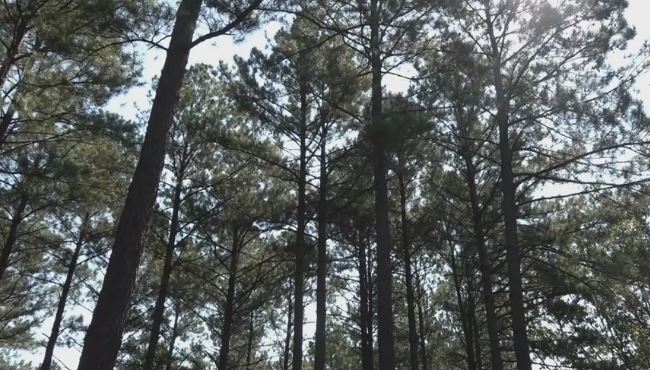
Arkansas' leading industry, agriculture, is facing a crisis.
But it’s not just row-crop farmers that are struggling — the
forestry industry is as well.
The market for timber has become so bad that mills are closing
and loggers are getting out of the business.
“This is devastating to the timber industry in South Arkansas.
Eight of the last 11 weeks, we have experienced mill closures in
Arkansas, some permanent, some temporary," said John Dawson,
president of Arkansas Pulpwood Co. in Camden.
"We're seeing loggers drop out. Lifelong families that are two,
three, four generations of loggers are getting out of the
business. Banks in South Arkansas are moving away from loaning
money to loggers," Dawson said.
As you’d expect, demand for paper has plummeted. You may think
that just affects the market for small-diameter trees, but only
half the wood in large trees is used for lumber — the residuals
are used for paper and other products.
“So if we’re not having markets for those materials, sawmills
are going to start seeing increased costs and difficulties in
operating," said Matthew Pelkki, director of the Arkansas Center
for Forest Business.
But demand for lumber is down too. Not as many houses are being
built thanks to high interest rates. Now, the price of timber is
almost as low as it was during the 2008 housing crisis. There’s
simply too much supply for the diminishing demand.
“In southeast Arkansas, prices for pulpwood-sized trees are
oftentimes less than a dollar per ton — sometimes even negative.
A landowner actually has to pay to have them removed from their
land," Pelkki told KATV.
What’s more, tariffs and trade wars have made the global market
volatile. China is usually one of Arkansas' biggest timber
buyers, but in March it banned imports of U.S. timber.
So why is this important to you? Well, of all U.S. states,
Arkansas' economy is the second most dependent on the timber
industry, which accounts for over four percent of our GDP. And a
lack of markets for forest products de-incentivizes forest
management.
Arkansas House Speaker Brian Evans this week joined fellow
speakers from southeastern states in signing a letter urging
Congress to seek relief for the forestry industry by
prioritizing reopening crucial Asian markets and creating a
90-day notice period before new tariffs take effect to help
stabilize the market.
“We are at a crossroads," Pelkki said, "and it’s going to be
important for both federal and state policies to help intervene,
to protect this industry."
The forestry industry, which is in 72 of the state’s 75
counties, directly or indirectly employs over 50,000 people in
Arkansas.
Source:
katv.com


