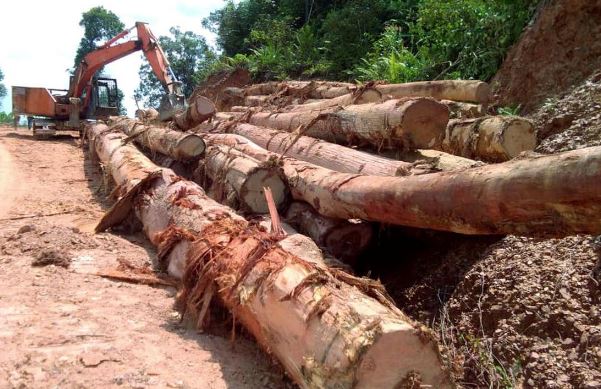
Timber harvesting activities in Malaysia recorded month-on-month
growth in September 2025, after several months of decline.
The latest monthly Global Timber Index (GTI) report, produced by
the Global Green Supply Chain Initiative (GGSC) in collaboration
with the International Tropical Timber Organisation (ITTO),
noted that the increase in timber harvesting may help ease the
shortage of logs.
“In September 2025, the GTI-Malaysia index registered 26.2 per
cent, a slight increase of 0.1 percentage point from the
previous month, was below the critical value (50 per cent) for
many months, indicating that the business prosperity of the
superior timber enterprises represented by the GTI-Malaysia
index shrank from the previous month.
“On a positive note, timber harvesting achieved month-on-month
growth after declining for several consecutive months.
“The harvesting and purchase price sub-indexes had both climbed
above the critical value of 50 per cent,” the report stated.
The report, however, noted that the remaining ten sub-indexes –
production, new orders, export orders, existing orders,
inventory of finished products, purchase quantity, inventory of
main raw materials, delivery time, employees and market
expectation – remained below the critical value.
“Compared to the previous month, the indexes for harvesting,
production, existing orders, purchase price, inventory of main
raw materials increased by 2.8-15.4 percentage points; the index
for delivery time was unchanged from the previous month; and the
indexes for new orders, export orders, inventory of finished
products, purchase quantity, employees, and market expectation
declined by 5.0-11.1 percentage points,” the report said.
GTI-Malaysia enterprises highlighted several challenges,
including prolonged log shortages and insufficient demand for
export plywood. Imported plywood has also posed difficulties for
local manufacturers. Rising costs in labour, raw materials, and
ocean freights to the United States, coupled with a weak
building sector and slower customer purchases, were other key
concerns.
In related news, data from the Malaysia Timber Certification
Council (MTCC) showed that as of September 30, 2025, the
country’s 5.92 million hectares of forests had been certified
under the MTCS-PEFC scheme, covering 26 certified natural
forests and 10 certified forest plantations. The data also
indicated that 387 timber companies have obtained MTCS-PEFC
Chain of Custody certification.
Meanwhile, the timber industry in other countries including
Indonesia, China and Ghana remained in expansion territory for
several consecutive months, indicating steady growth overall.
Ghana’s GTI index stood at 61 per cent, marking nine straight
months of growth, while China’s index was at 51.7 per cent,
almost sustaining an upward trend over six months except for a
slight contraction in July. Indonesia’s GTI index was at 50.1
per cent, slightly above the critical value.
On September 29, US President Donald Trump announced 10 per cent
tariffs on imports of softwood timber and lumber, and 25 per
cent levies on kitchen cabinets, bathroom vanities and
upholstered wooden furniture into the United States, with
further increases set for January 1, 2026.
These measures, according to the GTI report, are expected to
affect timber markets in many regions, prompting affected
countries to explore market diversification.
“For example, in Brazil, the states of Parana and Santa Catarina,
heavily reliant on US exports, are the most affected, and there
are growing calls among businesses to develop new markets.
“Also, with the newly signed Indonesia-EU Comprehensive Economic
Partnership Agreement (IEU-CEPA), Indonesia is expanding its
presence in the EU market to boost exports of furniture and
other products.
“And in Gabon, some enterprises are calling on domestic
businesses not to withdraw from the US market but to enhance
their competitiveness there,” the report added.
Source: sarawaktribune.com


