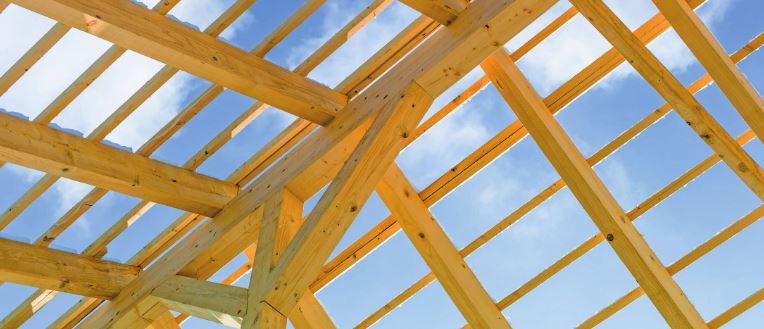
Wood as the raw material of the future
Through cascading use, this natural building material
contributes to climate protection.
One in five houses in Germany is now built from wood. And the
trend is rising. This is a good sign, because the ecological
balance of wooden buildings is impressively good.
Over its entire life cycle, a single-family house made of wood
saves up to 41 tons of CO₂ equivalents compared to a comparable
house built using conventional construction methods.
At the same time, wood as an ecological raw material offers
added value that should not be underestimated through what is
known as cascade use, in which wood should be used as a material
for as long and as often as possible. For the EU, wood products
now have a cascade factor of 1.57, meaning that wood is used
more than one and a half times.
An example of cascade use: sawmills are located between the
forest and wood processing. In Germany alone, the production of
sawn timber generates around 17 million cubic meters of
by-products such as wood chips and sawdust every year.
Sustainable forest thinning adds another 12 million cubic meters
of roundwood that cannot be sawn. This is so much that not all
of it can be processed into wood products. For this reason
alone, it makes sense to use biomass as a climate-friendly
energy source.
Germany has the highest pellet production in Europe. Domestic
pellets consist of 90 percent sawmill by-products and only ten
percent non-sawable roundwood. And after decades of growth, the
wood supply in German forests is very high and is likely to
increase further—because the conversion to climate-stable
forests will generate a great deal of wood in the coming
decades. This will continue to enable regional and sustainable
use of wood as a building material for residential buildings and
for the production of climate-friendly wood energy.
Source:
sonderthemen.swp.de


