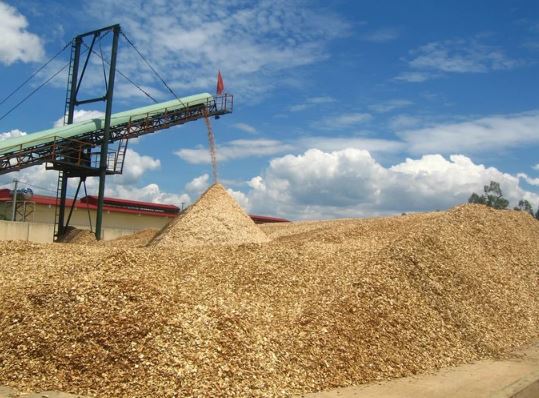
Surging demand from Japan and South Korea turns sawdust and
forest debris into gold for Vietnam’s wood industry.
Vietnam’s timber industry has achieved a historic milestone, as
wood pellets - once seen as mere byproducts - have now crossed
the $1 billion export threshold for the first time. The rapid
rise in global demand for sustainable bioenergy, especially from
Japan and South Korea, has transformed humble timber waste into
one of Vietnam’s most dynamic exports.
According to data from Vietnam Customs, wood pellet exports
reached USD 1.08 billion in the first 11 months of 2025, marking
a 52% increase over the same period in 2024. This surge makes
pellets the fastest-growing product in Vietnam’s wood industry.
In 2025, Vietnam’s total wood and wood product exports hit USD
17.3 billion, with pellets alone accounting for 7% of that
figure - up significantly from 4.8% the previous year.
Why the world wants Vietnamese wood pellets
Made from production leftovers such as sawdust, branches, and
wood chips, pellets offer high energy density, long burning
times, and low emissions. Their clean-burning properties have
attracted eco-conscious markets in Japan, South Korea, and
increasingly, the EU.
In 2024, Vietnam exported 6.03 million tons of wood pellets,
earning USD 805.27 million - up 29.1% in volume and 18.5% in
value compared to the previous year. Japan and South Korea
accounted for a combined 94% of Vietnam’s pellet exports.
The global push toward renewable energy has turned wood pellets
into a vital fuel source for thermal power plants and industrial
heating systems. As countries tighten carbon emissions targets,
demand for low-emission fuels like pellets is expected to grow
even more.
Success comes with serious challenges
Despite the billion-dollar milestone, industry experts from
Forest Trends warn that Vietnam’s pellet sector remains
vulnerable. The industry still relies heavily on secondary raw
materials - waste products from other wood processing operations
- and lacks dedicated supply zones. This dependency exposes
pellet producers to fluctuations in availability, pricing, and
seasonal constraints.
Adding to the pressure are increasingly strict sustainability
requirements from export markets. South Korea has recently
tightened its quality standards, driving up export prices.
Meanwhile, Japan now mandates traceability certifications like
FSC and PEFC, and is gradually rolling out SBP (Sustainable
Biomass Program) standards for low-emission supply chains.
To maintain its momentum, the sector must address both supply
stability and certification compliance. Experts urge Vietnamese
firms to invest in their own raw material zones and prioritize
legality and sustainability in line with import regulations.
From forest debris to billion-dollar value
Vietnam’s success story with wood pellets is a compelling
example of upcycling - transforming what was once considered
low-value waste into a strategic, high-demand product.
Earlier in 2025, even broken branches and storm-damaged trees
from typhoons like Yagi were collected and processed into wood
chips or pellets, helping earn nearly USD 2 billion in revenue
from exported forest scraps in just seven months.
With strategic planning and sustainable sourcing, Vietnam’s wood
pellet industry stands poised not just to grow, but to lead
globally in the renewable biomass energy space.
Source:
vietnamnet.vn


