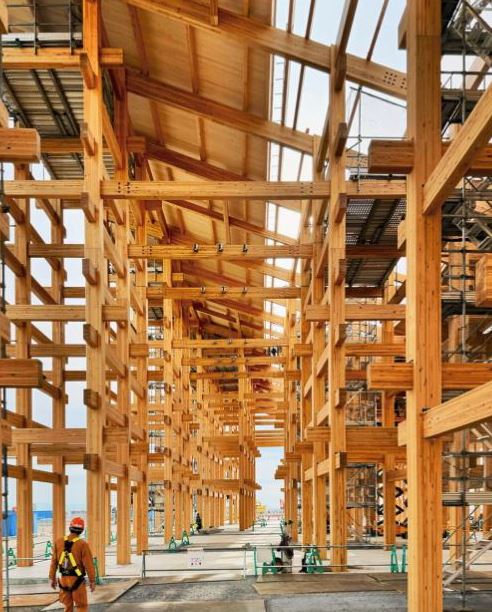
Mass timber Japan is gaining speed as Japanese banks improve
credit assessments and offer easier loans for qualified
projects. With construction cost inflation pressuring budgets,
faster build times and lower embodied carbon make timber
attractive for developers and lenders. Momentum is visible in
regional markets, especially Kyushu, where non-residential
projects are expanding. At the same time, green financing Japan
products are linking interest margins to clear climate outcomes.
We explain what is changing, how projects can qualify, and what
investors should watch as decarbonized construction scales in
2026.
Banks ease financing as costs and carbon pressures rise
Lenders are refining appraisal models to reflect shorter
construction schedules, lighter foundations, and lower embodied
carbon from timber. That reduces carrying costs and improves
loan serviceability. Recent reporting shows financial
institutions rating timber projects more favorably, which makes
loans easier to assemble and refinance. Developers cite quicker
approvals as a key shift, helping mass timber Japan become a
realistic option for mid-rise builds じわり増加する木造ビル….
Construction cost inflation has squeezed contingencies and
increased project risk. Steel and concrete price volatility also
complicates bids. Timber can mitigate some exposure by using
domestic species, improving logistics predictability, and
trimming time on site. Lighter structures can lower foundation
and crane costs in yen terms. Combined with measurable carbon
savings, these factors give lenders clearer risk controls. That
makes mass timber Japan more bankable today than a year ago.
How green financing works for timber projects
Green financing Japan typically includes green loans and
sustainability-linked loans. Margins can step down if projects
meet verified targets, such as embodied carbon thresholds,
renewable sourcing, or waste reduction. Banks look for
third-party opinions on frameworks and clear reporting plans.
For mass timber Japan, that means disclosing structural design
choices, timber origin, and life-cycle assessments so lenders
can align terms with transparent performance indicators.
Prepare a detailed cost plan, schedule gains from offsite
fabrication, and procurement maps for domestic wood. Document
fire, seismic, and durability strategies, plus insurance and O&M
plans. Include contingencies for timber and labor pricing.
Lenders want credible contractors, realistic lease-up or sale
assumptions, and clear carbon reporting. These elements reduce
uncertainty, allowing banks to price mass timber Japan loans
more competitively and approve higher leverage within policy
limits.
Final Thoughts
Banks in Japan are easing loans for qualified timber buildings
as developers hunt for cost control and carbon cuts. The
clearest traction is in Kyushu, where a stronger supply base
meets rising demand, though training more engineers remains
vital.
Source:
meyka.com


