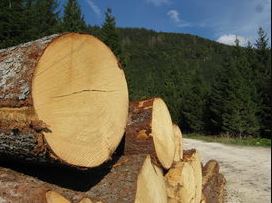
Demand for softwood logs is declining
The Austrian economy remains weak, as both the industrial and
construction sectors are suffering from sluggish foreign demand,
declining investment, and rising energy prices. The war in Iran
is further dampening sentiment.
Coniferous Sawlogs
The Austrian sawmill industry has ample stocks of coniferous
sawlogs. While demand in northern Austria can still be described
as normal, it has already weakened in the south and west. In
addition to occasional shortages of freight capacity,
roadblocks, quotas, and supply restrictions are also causing
delays in transport. However, the resulting stockpiles in the
forests should be cleared in the coming weeks. Prices are mostly
stable, though in some cases they are coming under slight
pressure. For pine, due to rising temperatures, timely removal
is essential to avoid quality losses. Larch continues to be in
brisk demand with stable prices.
A price-driven focus on softwood harvesting reduced the supply
of hardwoods in the waning season. Buyers are correspondingly
receptive. Demand for oak and ash remains brisk. Other hardwoods
are in targeted demand for high-quality grades.
Industrial Lumber
Stockpiling of softwood industrial roundwood by the paper, pulp,
and panel industries has declined significantly. The combination
of lower supply and a partial shift of freight capacity toward
the transport of sawlogs has caused demand to rise gradually.
Where transport options are available, the wood supplied is
promptly hauled away and taken delivery of. Prices for pulpwood
and fiberwood have risen slightly, at least regionally; however,
prices for the “coniferous panel wood” category have declined in
some areas. Demand for hardwood roundwood remains subdued.
Energy Wood
The energy wood market varies significantly by region. In Upper
Austria, the market remains tight. In Lower Austria, increased
demand and declining inventories are leading to higher demand
for high-quality wood, which is also affecting prices. In the
rest of the country, a seasonal decline in demand is being
observed. Prices are stable.
Due to rising temperatures, priority should be given to forest
hygiene before the bark beetles begin their swarming flight.
This includes not only clearing snow-related damage caused by
wet snow but also processing and removing all coniferous wood
suitable for breeding from the forest.
All prices listed apply to transactions during the period
from February to early March 2026 and are net prices, to which
sales tax must be added. The following tax rates apply to the
sale of wood to businesses: 13% for all product lines under the
flat-rate VAT scheme; under standard taxation, 13% applies to
energy wood/firewood and 20% to roundwood. Subject to deviations
and changes.
Source: LK Austria


