The landscape of the United States wood products industry in
2026 is being shaped by evolution from commodity lumber toward
high-performance engineered wood systems. For decades, the
industry was a reactive participant in the boom-and-bust cycles
of the domestic housing market, but the current industrial era
is marked by a sophisticated diversification of end-use
applications. As we move through 2026, the supply and demand
dynamics of engineered wood products and mass timber are being
shaped by a tightening of domestic production capacity and a
simultaneous surge in institutional demand for prefabricated
construction. While traditional sawmills have faced a turbulent
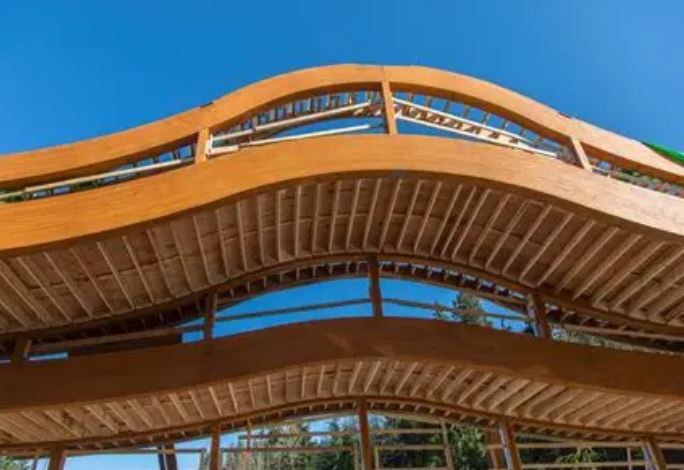
consolidation period, the emergence of mass timber, specifically
glulam and cross laminated timber, have created a high-growth
sector that is increasingly more independent from the
traditional volatility of the single-family residential market.
On the supply side, the wood industry is navigating a period of
restructured supply and capacity following a series of
significant mill closures in recent years. Major industry
players, including West Fraser and Interfor, closed some of
their facilities in the United States and Canada, removing a
significant portion of board feet of production capacity from
the North American market. However, 2026 is seeing a strategic
counter-movement with the startup of several grassroots sawmills
in the country. Some of these new plants represent a shift in
business strategy, embracing automation and the proximity to
high-growth timber baskets where Southern Yellow Pine is
abundant. This reshuffling has created a leaner, more
technologically advanced domestic supply chain that is better
positioned to manage the modest single digit projected growth in
housing starts for 2026.
The demand for mass timber products like glulam and cross
laminated timber continues to grow within the broader wood
market, maintaining a double-digit annual growth rate. As of
early 2026, there are still thousands of engineered wood and
mass timber projects either completed or in progress across the
United States. This demand is no longer driven solely by the
green credentials of wood, but by a hard-nosed business case for
construction efficiency. Developers are increasingly utilizing
mass timber for mid-to-high-rise commercial and multi-family
projects because of its ability to compress construction
timelines faster than traditional construction. In an
environment where skilled construction labor remains crucial,
the ability to ship precision-engineered wood products to a job
site for assembly is a major competitive advantage. This has
shifted the demand profile from materials-only to integrated
systems, where timber manufacturers are acting more like
technology partners than simple lumber suppliers.
The industrial outlook for the remainder of 2026 is one of
cautious scaling. The era of the siloed timber industry is over,
replaced by an interconnected ecosystem where the health of a
local sawmill in Georgia is directly linked to the procurement
strategy of an architecture firm in New York. We are seeing a
shift in commercial real estate where biophilic design, the use
of exposed wood to improve occupant well-being, is becoming a
standard requirement for a very nice office space. This has
transformed wood from a hidden structural element into a
high-visibility finish material, allowing mills to capture
higher margins on architectural-grade products.
Institutional investment is increasingly flowing into the
engineered wood products and mass timber space as private equity
and venture capital recognize the scalability of modular wood
systems. This influx of capital is financing the integration of
recent technology within the manufacturing process to optimize
fiber yield and predictive maintenance. For some investors, the
appeal lies in the predictable margins of value-added products
compared to the price-taking nature of commodity lumber. As
manufacturers move toward vertically integrated business models,
controlling everything from wood assets to final architectural
shop drawings, they are seeking to limit their downside and
protect their balance sheets from the raw material fluctuations
that previously plagued the sector. This financial maturity
signals to the broader real estate market that engineered wood
products and mass timber are not a speculative venture but a
bankable, high-performance asset class.
Furthermore, the American industry is aggressively narrowing the
technical gap with European counterparts that have historically
dominated the high-end wood market. By localizing the supply
chain, domestic firms are reducing the lead-time risk that
previously discouraged developers from adopting wood-first
strategies. The logistics of 2026 favor regional hubs where the
proximity of automated fabrication facilities to dense urban
centers creates a more efficient manufacturing environment. This
regionalization strategy mitigates the impact of freight and
shipping disruptions and aligns with the demand for locally
sourced materials in corporate procurement. As these domestic
clusters mature, the American wood industry is evolving into a
high-stakes logistics and technology play, where the ability to
deliver a precision-engineered structural kit becomes a strong
differentiator in the construction marketplace.
Looking ahead to 2027 and beyond, the market is preparing for
a reacceleration phase. As new mills come online, the
industry is poised to move engineered wood products and mass
timber from a niche specialty to a standard building practice.
The core business challenge for the next 24 months will be the
development of a more robust domestic supply chain that can
support American builders amid logistics disruptions. As
manufacturing capacity aligns with the thousands of projects in
the United States design pipeline, the 2026 wood products
industry is proving that its future lies in being a high-tech,
precision-manufacturing sector rather than a harvester of raw
materials. The transition is not just about changing how we
build, but about changing the fundamental unit of value in the
American timber economy from the board foot to the
carbon-sequestering, high-performance engineered wood future.
Source:
mexicobusiness.news


