Some natural forests in the world are so old, that it is
difficult to even put a date to them. However, thanks to modern
scientific techniques, scientists are now able to roughly
pinpoint the age of some of the world’s oldest forests.
Still present on almost every continent (sorry Antarctica),
there are ancient forests in nearly every corner of the world.
While all of the forests on this list are protected sites and
remained largely untouched for many millennia, in recent years,
nearly all of the forests — particularly the rainforests — have
had large portions destroyed by human activities, especially
logging. Fortunately there are conservation laws in place and
many people have dedicated their lives to ensuring that these
forests are around for future generations.
11. Tarkine Rainforest
Age: Unknown for sure – at least 3,000 years
Location: North west Tasmania, Australia
Area: 695 sq mi (1,800 km2)
Forest Type: Cool-Temperate Rainforest
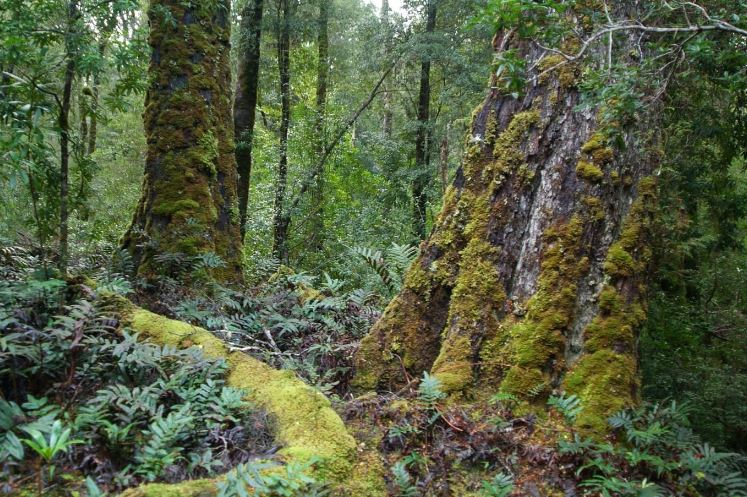
The Tarkine Rainforest largest area of Gondwanan cool-temperate
rainforest in Australia. The Gondwanan rainforests were named
after the ancient supercontinent of Gondwana – which existed
between 500 — 180 million years ago — because the fossil shows
that the present-day rainforests contain many of the same
species as the rainforests covering Gondwana.
The Tarkine Rainforest’s exact age is unknown, but it is
believed to be quite ole and is at least 3,000 years old like
the forest’s oldest trees.
Like all of the rainforests on this list, the Tarkine Rainforest
has been critically threatened by logging and other human
activities. Fortunately, there is a strong conservation effort
to save the remaining Tarkine Forest.
In 2005, the Tasmanian and Australian governments agreed to
protect an additional 70,000 hectares of rainforest in the
Tarkine from logging.
10. Ancient Bristlecone Pine Forest
Age: over 5,000 years
Location: Inyo National Forest, White Mountains,
California, USA
Area: 43.75 sq mi (113.3 km2)
Forest Type: Bristlecone Pine Forest
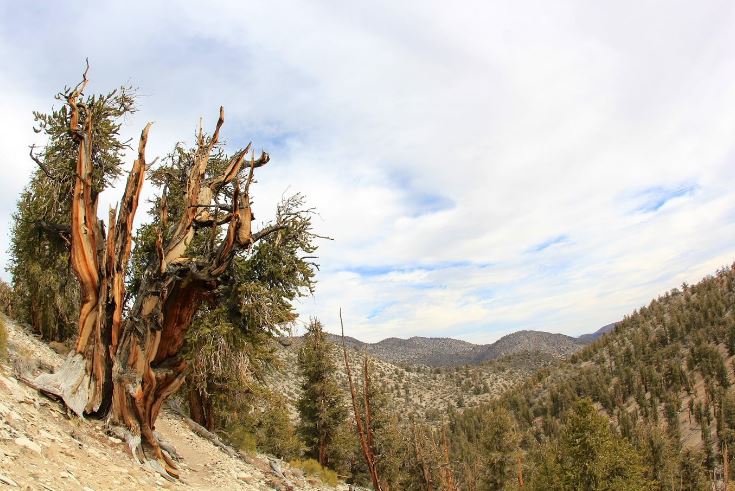
As its name suggests, the Ancient Bristlecone Pine Forest is
renown for its many Great Basin bristlecone pines, which are
some of the oldest trees in the world. The Ancient Bristlecone
Pine Forest is most likely much older, but it is at least 5,000
years old (the age of its oldest trees).
There are several different notable trees within the Ancient
Bristlecone Pine Forest, including Methuelah and the Patriarch
Tree, which is the world’s largest known bristlecone pine.
The Ancient Bristlecone Pine Forest is open to visitors, but the
locations of some of the forest’s oldest trees are not made
available to the public.
9. Yakushima Forest
Age: over 7,000 years
Location: Yakushima, Japan
Area: 73.2 sq mi (189.6 km2)
Forest Type: Warm-Temperate Ancient Forest
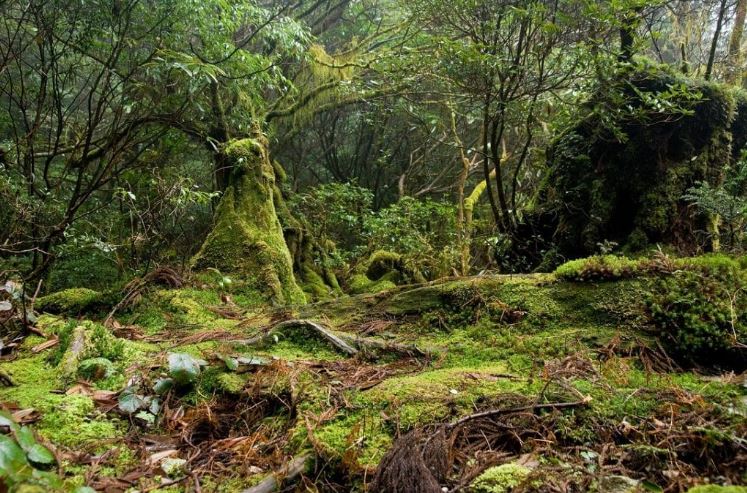
Yakushima Island was designated a UNESCO World Heritage Site in
1993 and contains the remnants of a warm-temperate ancient
forest that is unique to this part of the world. While no one
knows for sure how old Yakushima Forest is, one of its oldest
trees, the Jōmon Sugi (yakusugi (Japanese cedar)), is believed
to be over 7,000 years old!
In addition to being an ancient forest, Yakushima Forest is one
of the world’s most beautiful forest, with many visitors noting
that it looks like the scene of a fairy tale.
Red-bottomed macaques (Yakushima macaque) and a variety of sika
deer (yakushika) are native to Yakushima Island and forest.
According to some visitors, the macaques and deer have a
symbiotic relationship and the monkeys sometimes ride on the
backs of the deer.
8. Pando
Age: over 80,000 years
Location: Fishlake National Forest, Utah, USA
Area: 106 acres (43 ha)
Forest Type: Clonal Colony of Quaking Aspen
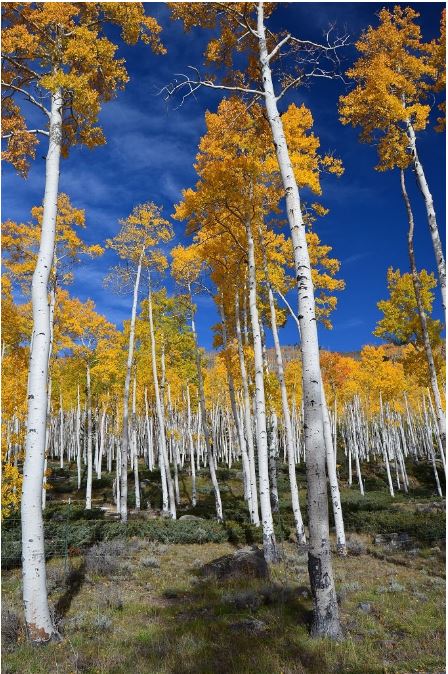
Despite appearing to be an enormous grove of quaking aspens,
Pando is not exactly a forest, but it is acutally a single
living organism! Pando is what is known as a clonal colony,
meaning that each individual tree is a clone of the original
tree.
This unique organism is not only one of the oldest living
trees/“forest”, it is also one of the largest single organisms
in the world — Pando covers an area of 106 acres (43 hectares).
Although Pando has survived for over 80,000 years, it may be
dying. In recent years, scientists have noticed that Pando is
not regenerating like it should. Instead, mule deer and cattle
are eating Pando’s young saplings before they can grow bigger.
7. Kakamega Forest
Age: 2+ million years
Location: Kakamega and Kisumu Counties, Kenya
Area: 91.89 sq mi (238 km2)
Forest Type: Tropical Rainforest
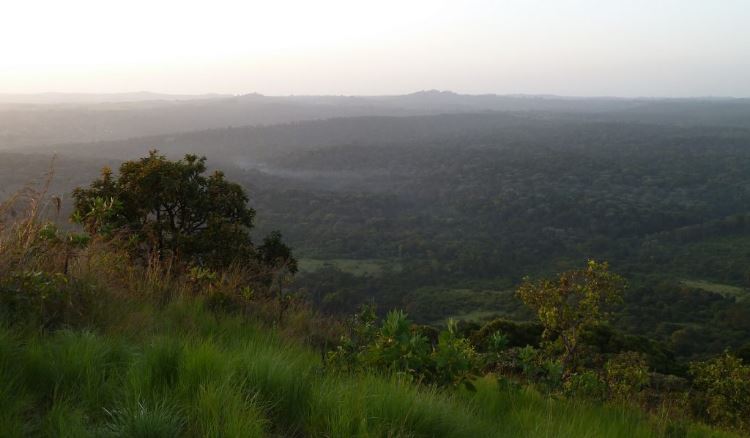
Kakamega Forest is a few million years old and is the only
rainforest in Kenya. It is believed that Kakamega Forest is all
that remains of a tropical rainforest that spanned from coast to
coast of the Africa across the continent’s the equatorial line.
As a tropical rainforest, Kakamenga Forest looks more like the
rainforests of Central and West Africa than the other forests in
East Africa.
Like most of the forests on this list, Kakamega Forest is home
to plants and animals that cannot be found anywhere else in the
world. In Kakamega Forest, there are over 60 species of ferns,
150 species of trees and shrubs, and 170 species of flowering
plants, including 60 species of orchids with nine species
endemic to this forest.
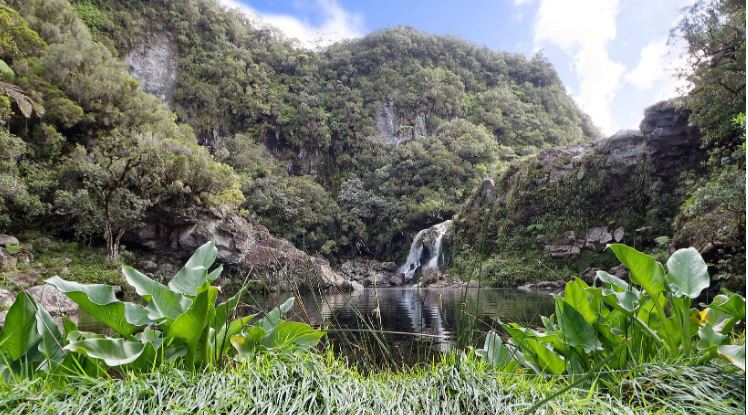
6. Réunion National Park
Age: 2 – 2.5 million years
Location: island of Réunion (near Madagascar; governed by
France)
Area: 406.89 sq mi (1,053.84 km2)
Forest Type: Low-Altitude Tropical Rainforest
Réunion National Park only became an officially protected site
on the island of Réunion in 2007. However, the forested lands
protected by Réunion National Park are nearly as old as the
island, which emerged over 3 million years ago.
The island sits atop a volcanic hotspot and there are two
volcanoes on the island, one active and the other dormant. Both
slopes of the two volcanoes are heavily forested.
Réunion National Park contains 43 of the 2,000 vertebrae species
on the island and most of the 1,600 recorded native plant
species. While most of Réunion National Park is untamed nature,
there is a small cultivated interior where farming livestock and
crops.
5. Caspian Hyrcanian Mixed Forests
Age: 25 – 50 million years
Location: Shores of the Caspian Sea of Iran and part of
Azerbaijan
Area: 21,300 sq mi (55,100 km2)
Forest Type: Temperate Broadleaf and Mixed Forests
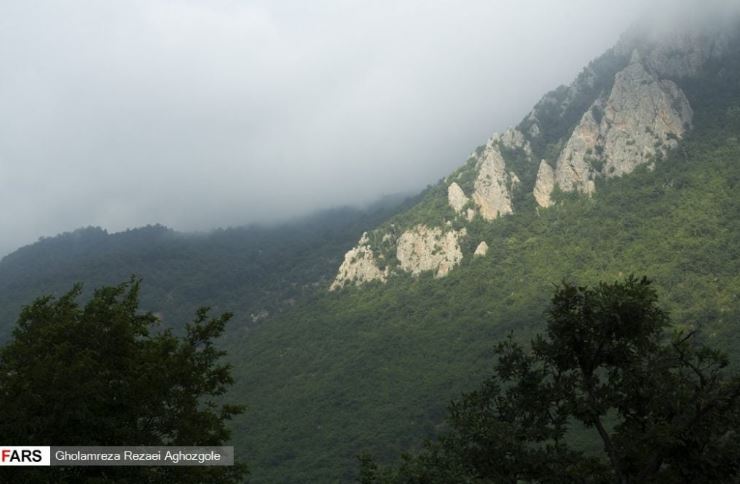
The Caspian Hyrcanian Mixed Forests ecoregion is relatively
unknown, but it is one of the most beautiful ancient forests in
the world. In 2019, the Caspian Hyrcanian Forests were granted
UNESCO World Heritage status and the history of the forests
dates between 25 to 50 million years!
Stretching along the coast of the Caspian Sea and the northern
slopes of the Alborz Mountains, the Hyrcanian Forests cover five
different Iranian provinces: North Khorasan, Golestan,
Mazandaran, Gilan, and Ardabil.
Golestan National Park is also located with the Hyrcanian
ecoregion. The rest of the Hyrcanian Forests are in southeast
Azerbaijan, including the Lankaran Lowland and the Talysh
Mountains.
4. Amazon Rainforest
Age: over 55 million years
Location: Brazil (60%), Peru (13%), and Colombia (10%);
minor amounts in Venezuela, Ecuador, Bolivia, Guyana, Suriname,
and French Guiana
Area: 2.1 million sq mi (5.5 million km2)
Forest Type: Moist Broadleaf Tropical Rainforest
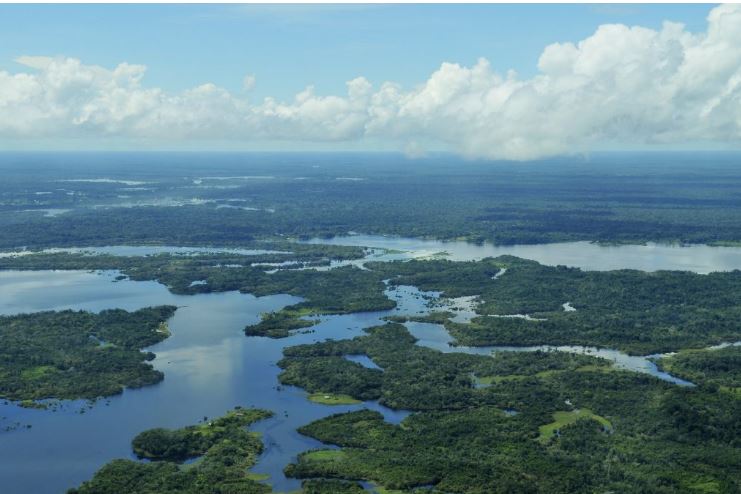
The Amazon Rainforest may not be the oldest forest in the world,
but it is the largest and most biodiverse tropical rainforest in
the world. In fact, the Amazon Rainforest is so big that it
represents over half of the Earth’s remaining rainforests.
About 10% of the world’s world’s known biodiversity, including
endemic and endangered flora and fauna reside within the Amazon
Rainforest.
In addition to a number of native plants and animals, a large
number of indigenous people still live in the Amazon Rainforest.
Around 9% (2.7 million) of the Amazon’s population is still made
up of indigenous people — 350 different ethnic groups, more than
60 of which still remain largely isolated.
Although the Amazon Rainforest is important to the world’s
climate function, over the last few decades many sections of the
Amazon Rainforest have been destroyed because of deforestation.
3. Taman Negara
Age: over 130 million years
Location: Pahang, Terengganu and Kelantan, Malaysia
Area: 1,677 sq mi (4,343 km2)
Forest Type: Tropical Rainforest
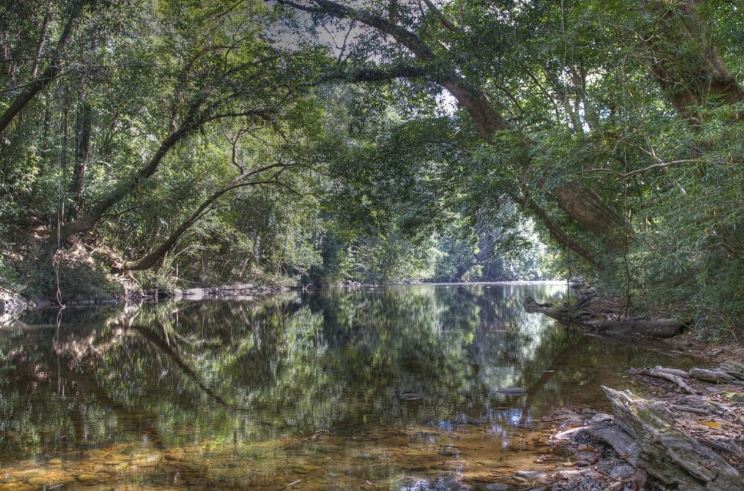
Although the Daintree Rainforest is much older, Taman Negara is
often billed as the “world’s oldest rainforest.” While it might
not actually be the oldest, Taman Negara is extremely old with
an estimated age of over 130 million years.
Taman Negara was the first officially protected area in Malaysia
and was established in 1938. The Sultans of Kelantan, Pahang,
and Terengganu (during King George’s Silver Jubilee), each set
aside a piece of their lands to form Taman Negara.
Like many of the old forests on this list, Taman Negara is a
popular tourist destination and one of its most famous
attractions is the Taman Negara Canopy Walk – a 510 meter (1,673
feet) long suspension bridge spanning across the forest’s high
treetops.
2. Borneo Lowland Rainforest
Age: about 140 million years
Location: Borneo (shared by Malaysia, Brunei, and
Indonesia)
Area: 165,100 sq mi (427,500 km2)
Forest Type: Tropical and Subtropical Moist Broadleaf
Forests
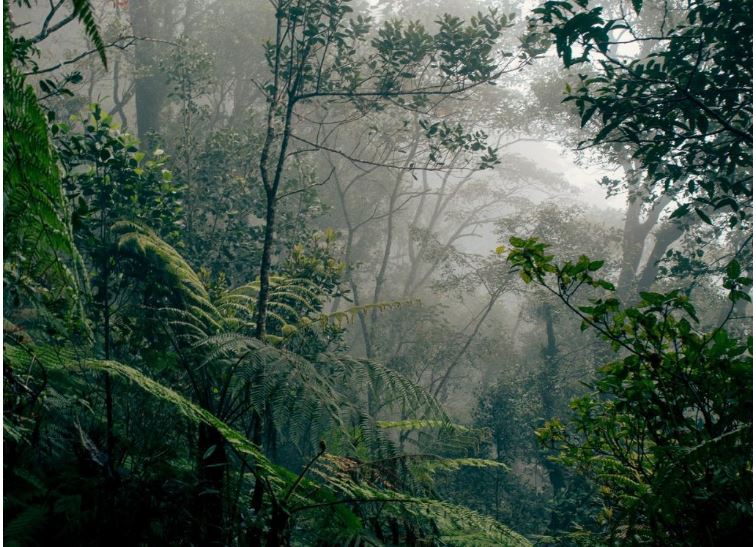
The Borneo Lowland Rainforest is about 140 million years old and
covers much of the island of Borneo. In the past, the rainforest
completely covered the island. The Borneo Lowland Rainforest as
well as the whole island has a rich ecosystem.
Borneo is home to over 15,000 species of flowering plants, 3,000
species of trees, 221 species of terrestrial animals, and 420
species of birds that live on the island full time.
Despite being one of the world’s oldest and largest forests in
the world, much of the Borneo Lowland Rainforest is being wiped
out due to intense deforestation. It is estimated that Borneo
has lost about 30% of its forest over the past 40 years.
1. Daintree Rainforest
Age: 180 million years
Location: North east coast of Queensland, Australia
Area: ~460 sq mi (1,200 km2)
Forest Type: Tropical Rainforest
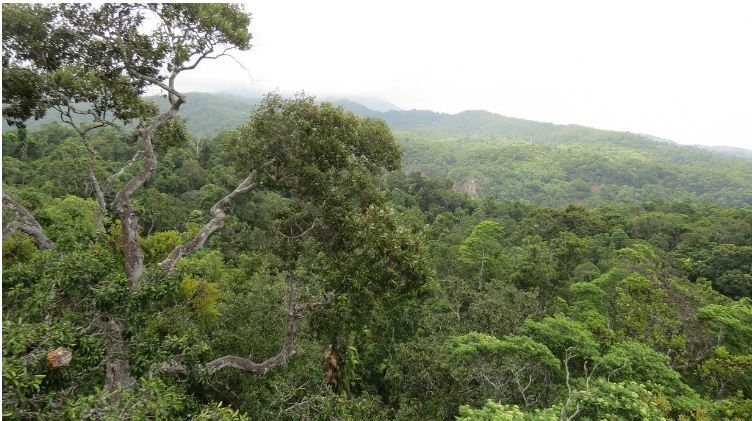
The Daintree Rainforest is estimated to be about 180 million
years old making it the oldest forest in the world. In addition
to being the oldest forest, the Daintree is also one of the
largest continuous areas of rainforest in Australia – the
Daintree Rainforest covers about 460 square miles (1,200 square
kilometers).
With such a long and rich history, the Daintree Rainforest is
home to about 30% of Australia’s frog, reptile and marsupial
species in Australia, 65% of the country’s bat and butterfly
species as well as 18% of all bird species.
There are also over 1,200 species of insects living in Daintree
Rainforest. Additionally, the Daintree Rainforest is a popular
tourist attraction and receives about 400,000 visitors every
year.
Source: oldest.org


