Weyerhaeuser plans to use artificial intelligence across
logging, replanting, trucking and mill operations as it seeks to
add $1 billion in annual profit by 2030 without relying on
higher lumber prices.
Chief Executive Devin Stockfish said that the company has 125
years of forest-growth data and plans to use AI to improve
decisions across its timberlands. The Seattle-based company says
the targeted profit increase would roughly double 2025 profits.
Weyerhaeuser's shares have fallen about 40% from their 2022 peak
during the pandemic lumber boom, while the broader market has
risen on investor interest in AI. The company hired John
Scumniotales, a former Amazon Alexa executive, to help lead its
AI deployment.
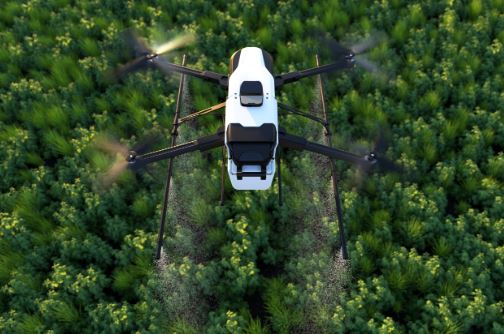
Weyerhaeuser is building a digital model of its timberlands
using satellite images, drone footage and lidar sensors. The
system is expected to identify tree size, species and spacing,
giving the company more detailed data on forests covering an
area roughly the size of Indiana. The company has trained an AI
model to review drone footage and measure seedling survival
rates. The system can replace manual counts by foresters in
steep or difficult terrain while producing faster and cheaper
data.
Weyerhaeuser plants more than 100 million seedlings a year,
equal to about 190 a minute. Its hardwood forests in New England
and West Virginia are logged selectively and regenerate
naturally, while its conifer forests in the South and Pacific
Northwest are clear-cut and replanted.
The company is testing semiautonomous logging equipment,
including a driverless skidder that dragged felled trees at a
Southern logging site. The machine used AI-assisted navigation
and terrain mapping from Kodama Systems, while an operator
controlled it from 400 miles away. Senior Vice President of
Timberlands Travis Keatley said the technology could allow one
operator to manage multiple skidders and move the company toward
full autonomy. Future systems could cover more of the logging
workflow, including machines that cut, stack and delimb trees.
Weyerhaeuser is also working with Sweden's Nordic Forestry
Automation on an in-cabin AI assistant that shows harvesters
which trees to cut during thinning. The company built an
algorithm to leave the strongest trees with space to grow into
higher-value products, including lumber and utility poles.
Weyerhaeuser is also using AI to monitor mill equipment, match
production with demand and market prices, and optimize truck
routes. About 5,000 trucks rumble each day along company logging
roads whose total mileage rivals the U.S. Interstate Highway
System.
Source:
nipimpressions.com


