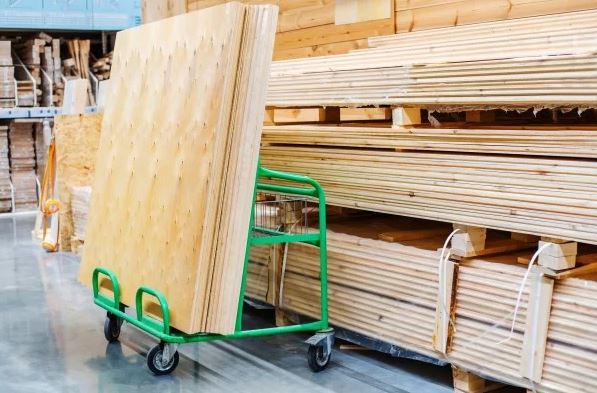
Concerns about future supply and anticipation of higher prices
arising from the Middle East conflicts have prompted some
Japanese buyers to secure physical stocks in imported tropical
hardwood plywood.
This trend is similar to some speculative buying of Japanese
softwood structural plywood due to the geopolitical tensions in
the Middle East.
“The effective closure of the Strait of Hormuz has raised
concerns about adhesive raw material supplies, and some
manufacturers are already facing procurement limits for April
(2026).
This uncertainty has led certain buyers to place
larger-than-usual orders, even as plywood mills maintain
cautious stance because their inventories are not abundant and
raw-material outlook remain unclear,” according to the Japanese
Lumber Reports (JLR).
Due to sluggish housing starts, domestic demand for Japanese
softwood structural plywood remains weak currently.
“Some market participants have already begun moving in
anticipation of further price increases while others are voicing
concern about the outlook for supply and the possibility of
additional disruptions as the situation continues to evolve and
remains difficult to foresee with any confidence, especially
given the broader geopolitical uncertainty surrounding the
Middle East,” added JLR, its bimonthly report of which is
reproduced in International Tropical Timber Organisation (ITTO)
Tropical Timber Market Report.
The report said although by late March, adhesive manufacturers
had yet to make formal moves to request price increases from
plywood, laminated lumber or other engineered wood products,
industry observers note that raw-material suppliers are
announcing price hikes at different times and with varying
timing, making it difficult for adhesive manufacturers to
determine the eventual scale of cost increases.
According to JLR, plywood mills had already begun calling for
higher prices for structural plywood in February before the
effective closure of the Strait of Hormuz, yet sluggish demand
in March had slowed their efforts.
It added: “The possibility of adhesive price increases, combined
with rising transportation costs, is adding strain to the market
and complicating attempts to improve profitability for many
producers who were already facing challenging conditions and
limited room to manoeuvre in their pricing strategies,
especially as cost pressures accumulate and uncertainty
persists.
JLR said manufacturers of petrochemical-based building materials
have been announcing significant price increases one after
another, with some increments by 40 per cent, and indicating
that further increases may be unavoidable if procurement
conditions worsen.
Logistic costs are also rising. With crude oil prices surging,
several global major container vessels have introduced emergency
fuel surcharges ranging from US$50 to US$200 per container.
These surcharges apply to all long-haul routes and are expected
to raise transportation costs for imported materials,
particularly European products that require long-distance
shipping.City & Local Guides
On Japan’s imported tropical hardwood plywood, JLR said the
export prices from suppliers remain firm.
Indonesian ordinary plywood is offered at US$970 per cubic metre
(cu m) for 2.4mm panels, US$880 per cu m for 3.7mm and US$850
per cu m for 5.2mm.
Prices for 12mm coated formwork, formwork, and structural
plywood remain unchanged.
“Indonesian (plywood) manufacturers appear inclined to delay
contract negotiations in hopes of passing rising adhesive and
freight costs to buyers),” it added, Indonesia and Malaysia are
the largest suppliers of tropical hardwood plywood to Japan.
Source: ITTO


