Peer-reviewed study is the first to show a single fungal
species both remediating resin-contaminated wood waste and
forming a viable insulation material from it.
Engineers at the University of Bath have grown a common woodland
fungus on waste oriented strand board (OSB) to produce a
bio-based insulation material that matches the thermal
performance of conventional products, with carbon emissions more
than 10 times lower. The peer-reviewed study, published in
Scientific Reports, is the first to show a single fungus both
breaking down a resin-contaminated engineered wood product and
forming a usable insulation composite from it.
OSB, an engineered wood panel made from compressed flakes bonded
with synthetic resins, is widely used in walls, flooring and
roof decking, but the resins that give it strength also make it
one of construction’s more problematic waste streams. As a
result, it’s commonly incinerated or landfilled, where it can
release toxic fumes and greenhouse gases including methane.
Currently, wood waste accounts for 20 to 30 per cent of
construction and demolition waste and roughly 10 per cent of
total UK landfill volume, and treated products such as OSB have
no established recycling route.
The Bath researchers chipped waste OSB off-cuts, soaked them and
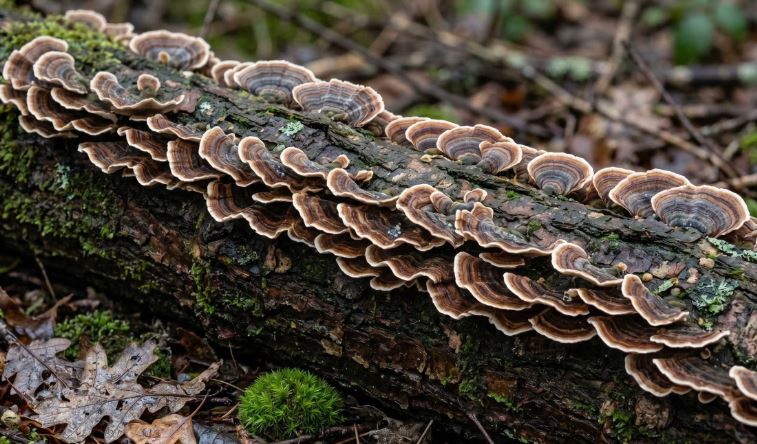
inoculated them with Trametes versicolor - a white-rot fungus
commonly known as turkey tail and found throughout UK woodlands.
Over five days, the fungus colonised the substrate and its
mycelium - a network of root-like filaments - bound the material
into a solid composite. The specimens were then oven-dried to
inactivate the fungus, leaving an inert bio-based material.
The resins in the OSB did not prevent colonisation and thermal
testing showed the resulting material insulated as well as
mineral wool, expanded polystyrene (EPS) and extruded
polystyrene (XPS). The researcher’s life cycle assessment found
its carbon footprint was a fraction of petrochemical-based
insulation and roughly a third of rockwool’s when compared on
equivalent insulating performance.
“One of the biggest challenges in construction is what happens
to materials at the end of their life,” said Joni Wildman, lead
author and researcher in the university’s Department of
Architecture and Civil Engineering. “This is the first time
we’ve shown the fungus doing two jobs at once - creating a
sustainable insulation material and transforming challenging,
and potentially harmful, waste into something valuable.”
Most of the production emissions came from electricity used in
drying and incubation, and the researchers identified drying as
the single biggest contributor - accounting for a third of the
total carbon footprint. More efficient drying methods and
lower-temperature sterilisation could bring the figure down
further at industrial scale.
The study used clean manufacturing off-cuts rather than
demolition waste, which may contain paints, coatings or
fasteners needing additional handling. Sourcing from
concentrated streams such as factory off-cuts is likely to be
more practical in the near term than mixed demolition waste.
However, fungal colonisation takes several days rather than the
minutes needed for conventional foam production, which the team
note is a constraint for scaling up. Further work will look at
how the material performs over time in different moisture
conditions, and whether other difficult waste streams -
including plastics - can be processed the same way.
Dr Andrew Shea, project supervisor, added: “This is an exciting
step towards using biology to rethink how we make and use
materials in building construction.”
Source:
resourcemedia.eco


