From Logs to Premium Veneer: AI Is Driving Accuracy,
Efficiency, and Sustainability
Artificial intelligence (AI) is reshaping Europe’s woodworking
industry, bringing unprecedented accuracy and efficiency to
veneer and lumber grading. What was once a subjective,
labour-intensive task is now being handled by smart systems that
analyse wood defects in milliseconds. By combining deep learning
with high-resolution imaging, these AI solutions improve product
quality, reduce waste, and optimise production across mills and
panel plants. The result is a smarter, more sustainable workflow
that boosts profitability while meeting strict European quality
standards.
Accurate grading has always been a challenge. Traditional
systems often fail to identify subtle defects like low-contrast
knots, minor cracks, or irregular grain patterns. AI now enables
production lines to detect these flaws reliably, ensuring that
every log and veneer sheet is assessed with consistent
precision. By analysing thousands of defect examples, machines
make grading decisions faster and more accurately than manual
inspection.
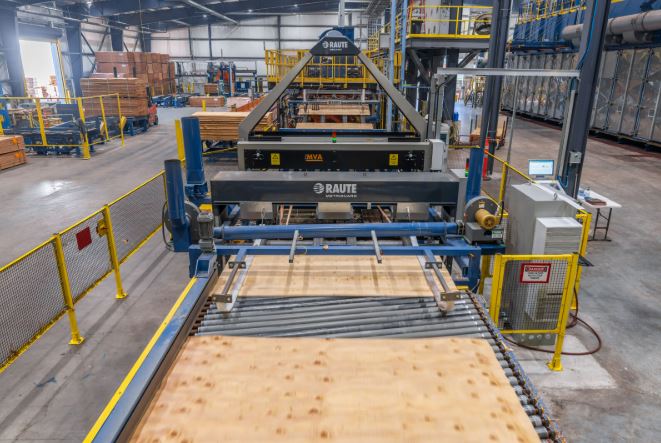
Leading the European charge, Raute from Finland has implemented
AI-powered visual veneer analysis that detects hidden knots,
splits, and low-contrast defects. Its systems integrate
seamlessly with existing production lines, increasing value
recovery from each log while maintaining high product quality.
Mills adopting Raute’s technology see fewer downgrades, higher
yield, and smoother workflow management.
Other companies across Europe are also advancing AI in wood
processing. Woodinspector, based in Poland, offers Q‑Scan AI,
which scans and evaluates defects in both hardwood and softwood.
The system supports automated sorting and cutting decisions,
giving mills a cost-effective path to AI-driven quality control.
AltaSigma delivers real-time surface analysis for lumber and
panel production. Its AI-based Wood Quality Analyzer generates
detailed traceability reports and flags defects before boards
reach downstream processing. This approach reduces waste and
ensures compliance with European quality and sustainability
regulations.
For high-speed lumber operations, MiCROTEC provides Woodeye
scanners, combining multi-sensor hardware with AI to detect
defects and sort wood automatically. By identifying knots,
cracks, and irregular grain patterns, Woodeye optimises output
quality and maximises raw material utilisation, a critical
factor for flooring, furniture, and structural timber
production.
KSM Vision contributes with its Woodspect platform, capable of
detecting defects in panels, lamellas, and furniture components
with over 98 % accuracy. Automating inspection not only cuts
labour costs but also accelerates production and ensures
consistent grading aligned with European standards.
AI is also entering broader timber grading. Lisker Oy, a Finnish
automation specialist, has developed ProfiGrade AI, which
predicts log performance early in the process. By spotting
potential defects before boards enter production, mills can
optimise yield and reduce waste from the outset.
Innovative startups like Neural Grader push the frontier with AI
systems combining high-resolution imaging and laser measurement.
These platforms detect cracks, unsound knots, and discoloration,
adapting outputs to regional grading standards and giving
European mills precise control over finished product quality.
Global players like USNR extend decades of automated grading
expertise to Europe, enhancing veneer and plywood analysis with
deep learning to support higher material recovery and consistent
quality.
The impact of AI on European woodworking is significant.
Consistent grading, faster production, and reduced manual errors
translate into improved margins and sustainability. Mills gain
actionable data that drives smarter decisions, allowing managers
to anticipate quality issues and optimise production lines.
AI is not replacing traditional craftsmanship. Instead, it
empowers woodworkers by combining human skill with machine
precision. Europe’s woodworking sector is embracing this
revolution, moving towards smarter, more efficient, and
sustainable production processes that meet modern market
demands.
Source:
woodandpanel.com


