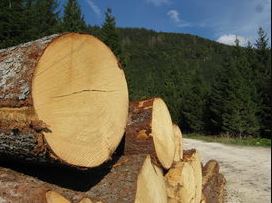
There is strong demand for industrial-grade roundwood.
The Austrian economy showed weak but stable growth of 0.2% in
the 1st quarter of 2026. The industry provided positive
impulses, while consumer-related services declined.
Coniferous Sawlogs
The wars in the Middle East have had a significant impact on the
coniferous sawlog market in Austria. After Italy, the Arab
region is the most important market for Austrian sawn timber.
The sawmill industry therefore expects production in 2026 to be
2% lower than in the previous year. With the overall supply of
sawlogs remaining good, demand is correspondingly subdued.
Particularly in the disaster-stricken areas of Styria, the
removal of timber cannot keep pace with processing speeds due to
bottlenecks in freight capacity and supply restrictions at
individual sawmills. In the rest of the country, forest
stockpiles have been nearly depleted. Delivery quotas are still
in place in Lower Austria as well. Prices have been adjusted
regionally and start at a minimum of 110 euros/FMO for the
flagship spruce grade, B, 2b+.
Industrial Lumber
The panel industry is seeing a significant reduction in the
volume of scrap wood, which is why there is also demand for
industrial roundwood in that sector. Demand from the paper and
pulp industry is brisk because roundwood inventories are
steadily shrinking. Supplied volumes are being shipped out
quickly and accepted without delay. Prices have mostly
increased. Beech fiberwood is selling at stable prices.
Energy Wood
The energy wood market varies significantly by region. In
Carinthia, demand is typical for the season. In Lower Austria,
material consumption remains consistently high due to new
locations for local heating networks. In Upper Austria, however,
it is difficult to sell volumes outside of long-term contracts.
Despite rainfall in recent weeks, there remains a significant
precipitation deficit throughout Austria. The risk of bark
beetle infestation is particularly high where material suitable
for breeding is present. Therefore, stands must be inspected
regularly, and necessary forest hygiene measures must be
implemented promptly.
All prices listed refer to transactions during the period from
May to early June 2026 and are net prices, to which value-added
tax must be added. The following tax rates apply to the sale of
wood to businesses: 13% for all product categories under the
flat-rate VAT system; under the standard taxation system, 13%
applies to energy wood/firewood and 20% to roundwood. Subject to
changes and deviations.
Source:
lko.at


