Raute, a global market leader in veneer, plywood and LVL
production technologies, has deployed AI‑enhanced defect
detection in production environments to improve how veneer,
plywood, and LVL production lines identify and utilize raw
material. The solution enables earlier and more consistent
production decisions, helping mills improve recovery, reduce
waste, and optimize energy use.
In veneer‑based engineered wood production, defect detection has
a direct impact on how efficiently raw material can be utilized.
It influences grading, clipping, routing, and repairing
decisions throughout the process. When detection is inaccurate
or inconsistent, it leads to unnecessary waste, reduced
recovery, and inefficient energy use in downstream stages.
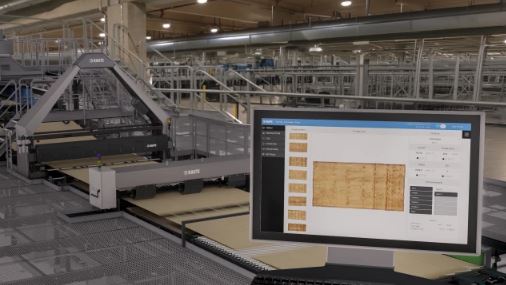
Raute's analyzers are industrial systems used to measure, grade,
and classify veneer and panels at different stages of
production. They provide real‑time quality data to support
production decisions across the process. By combining visual
defect detection with measurements such as moisture and strength
properties, analyzers create a consistent foundation for
data‑driven and increasingly automated production.
AI‑enhanced defect detection strengthens this role. By combining
industrial machine vision with deep learning models specifically
developed for veneer‑based engineered wood production, analyzers
can identify defects more consistently across different wood
species, surface characteristics, and production conditions. The
systems generate detailed defect maps for individual sheets,
enabling more precise, repeatable decisions.
Demand for this capability is growing as manufacturers work with
a wider mix of raw materials. AI‑based defect detection in Raute
analyzers is built on more than 50 years of analyzer development
and extensive experience from veneer processing across over 50
wood species. This provides a strong foundation for applying the
same approach to both commonly used and more specialized
materials.
“More variable raw materials mean that mistakes made early in
the process become increasingly costly later on,” says Markus
Sirvi? responsible for analyzer business development at Raute.
“When detection becomes more consistent, mills can improve
recovery and avoid inefficiencies that would otherwise carry
through the entire production process.”
Raute analyzers can be applied at multiple points in production,
including green veneer inspection after peeling, dry veneer
grading after drying, and panel repairing and grading.
Early‑stage defect detection is particularly important, as it
helps prevent low‑quality material from entering
energy‑intensive processes such as drying and hot pressing.
As engineered wood producers work to improve efficiency with
increasingly variable raw materials, AI‑enhanced analyzers are
becoming an established part of production. Their role is
shifting from inspection to enabling consistent, data‑driven
decision‑making across the production process.
Source:
raute.com


