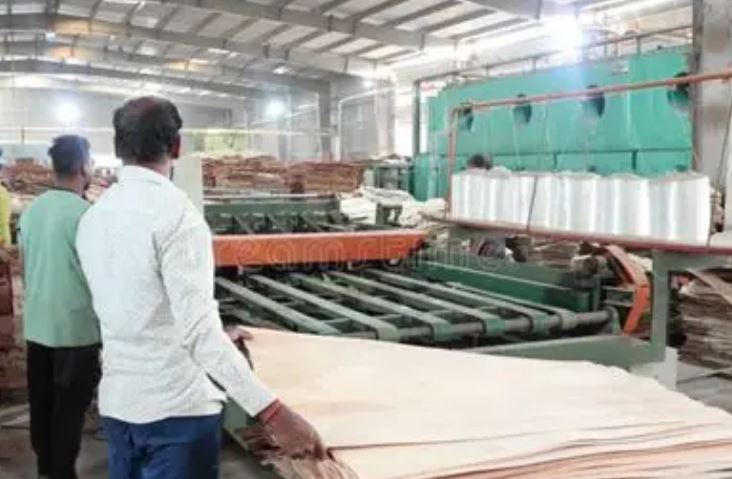
Background and Current Status of Core Imports
-- Key Drivers: India’s domestic plywood industry faces
severe domestic timber shortages and persistently rising raw
material prices; importing core veneer has become a key solution
to replace high-priced domestic timber.
-- Major Import Categories: Indian manufacturers primarily
source eucalyptus core veneer from Tanzania, while Cambodia and
Vietnam are also major suppliers of this type of core veneer.
-- Industry Recovery Status: Plywood mills in the Indian
states of Punjab and Haryana have resumed production by using
imported core veneer from Tanzania.
Plywood manufacturers across India are now leaning on imported
eucalyptus core veneer coming from Tanzania and Cambodia, as
domestic timber prices and log shortages push production costs
higher. That is according to the International Tropical Timber
Organization whose latest Tropical Timber Market Report,
published on Monday, records the shift across the country’s
panel sector.
“Imported veneers offer cost-effective alternatives to domestic
raw materials,” the report states, with panel factories across
Punjab and Haryana resuming operations and cutting their
exposure to the record poplar and plantation eucalypt prices
that forced some northern mills to reduce production or close.
Tanzania shipped US$6.12 million of veneer sheets into India in
2024 alone, according to United Nations Comtrade figures, with
the report’s price tables listing Tanzanian teak logs at $515 a
hoppus cubic metre C&F Indian ports. The trade places Dar es
Salaam inside an East African veneer economy where
Chinese-backed mills have made Kenya a hub for plywood inputs.
Shipment records compiled by trade data firm Volza name Century
Plyboards among the Indian buyers taking Tanzanian core veneer,
alongside Akum Plywood and the Indian Teak Company, with every
logged consignment described in the bills of lading as
eucalyptus core veneer.
Finished plywood runs into the opposite treatment at the border,
with Bureau of Indian Standards rules including IS 303 mandatory
for domestic and imported panels since February 2025. Domestic
makers clear certification in a standard 30 days, while foreign
suppliers under the Foreign Manufacturers Certification Scheme
face audits of up to 180 days through testing, factory checks,
and paperwork.
Suppliers have adjusted in response, working with compliance
agencies and testing stock before it ships, a shift that hands
buyers a steadier supply of raw material but far longer planning
cycles on finished panel.
It comes as panel producers announce price increases across MDF,
particleboard, and edge banding, with furniture makers holding
contracts agreed before the increases took effect.
Domestic buyers absorb the output, with market researcher
IndexBox ranking India second globally for plywood production
and third for consumption, both running near 12 million cubic
metres a year. The export that does move tends to travel as
furniture rather than as panel, with Indian wooden furniture to
the EU and UK rising 7.8 per cent to 28,000 tonnes in the four
months to April, according to the report’s analysis of Eurostat
and UK customs data.
Policy support for private planting on degraded land, with
afforestation charges waived and Kerala among the states paying
incentives for eucalyptus, poplar, and teak, could widen
domestic fibre supply over time, though the report treats
imported core veneer as the answer to the shortage now.
India’s demand explains the reach across the Indian Ocean, on
course to climb 70 per cent to 98 million cubic metres of
roundwood by 2030. IndexBox already ranks Tanzania as the
fastest-growing of India’s main veneer suppliers by import
value, a lane the border keeps open while finished plywood
waits.
Source: ITTO


