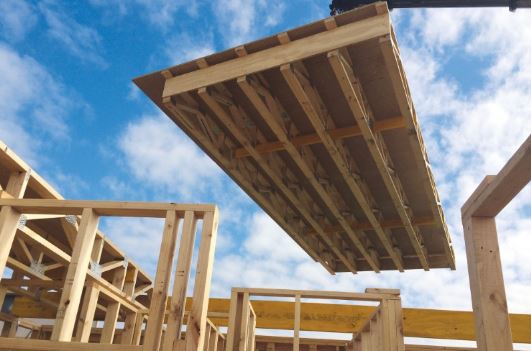
At FTMA Australia’s Future Framing Markets Forum in Melbourne,
manufacturers, researchers and industry representatives examined
how existing timber framing capability can participate in
Australia’s shift towards industrialised construction,
higher-density housing and modern methods of construction.
Australia’s transition towards industrialised construction is
gathering momentum, but the question of who will manufacture the
next generation of housing remains unresolved. (main image:
Kersten Gentle, CEO, FTMA.)
That tension ran through FTMA Australia’s Future Framing Markets
Forum, held at PARKROYAL Melbourne Airport on 20 October, where
industry representatives examined the changing housing market,
new timber framing standards, research priorities, manufacturing
capability and the skills required to support modern methods of
construction (MMC).
Across the presentations, a common argument emerged: Australia’s
established frame and truss manufacturers already possess
considerable prefabrication expertise, but capitalising on
emerging housing markets will require changes in design
standards, technical capability, industry collaboration and
government procurement.
Opening the forum, Kersten Gentle, CEO of FTMA Australia,
questioned whether the substantial public investment being
directed towards MMC adequately recognised the manufacturing
sector already supplying much of Australia’s housing.
“I think sometimes in the rush to develop new systems and
programs, we overlook the manufacturing capability we already
have in this country,” she said.
Gentle suggested that even if factory-built housing accounted
for 20 to 30 per cent of the market within 15 years,
conventional building methods would continue to represent the
majority of housing production.
Her concern was that public policy risked treating
industrialised construction as an entirely new industry rather
than recognising the opportunities for existing manufacturers to
participate.
For frame and truss businesses, she argued, the opportunity was
not simply to defend established markets, but to help builders
move from one- and two-storey housing into more complex
residential construction.
------
------
------
Source:
builtoffsite.com.au


