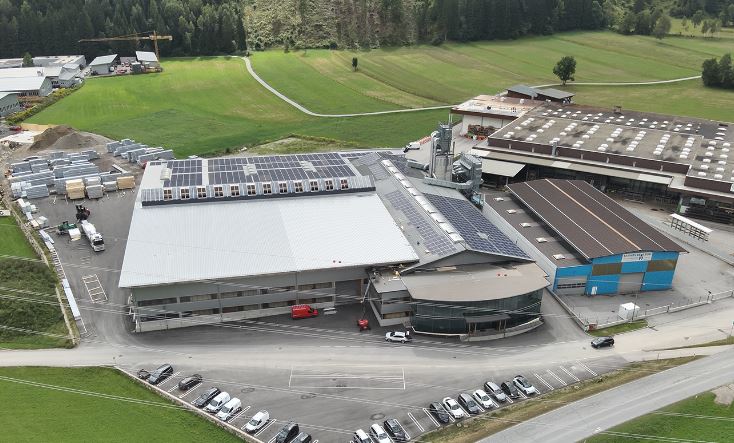
One of Europe's largest glulam producers is closing its plant in
the Austrian town of Rangersdorf, with three of its other plants
taking over the custom glulam made there. That is according to
the Hasslacher Group, which said last week that the plant never
had enough work, despite the group’s “intensive efforts”.
The Hasslacher Group is relocating the production of its
subsidiary, Gemson GmbH, in Rangersdorf to its existing sites in
Stall im Mölltal, Sachsenburg and Hermagor. This move comes
against the backdrop of a four-year downturn in the building
construction market, which no longer allows for sufficient
capacity utilisation at the Rangersdorf site.
A shrinking building construction sector
“When we joined Gemson a few years ago, we assumed the market
was growing. In fact, the building construction sector – which
is vital to the timber industry – has been shrinking for four
years running as a result of the global crises. “Despite our
best efforts, we have not been able to achieve the necessary
capacity utilisation at the Rangersdorf site under these
circumstances,” says Christoph Kulterer, CEO and owner of the
Hasslacher Group.
The majority of staff will remain with the company
The machinery from Rangersdorf will be relocated to the
plants in Stall im Mölltal, Sachsenburg and Hermagor by the end
of the year and integrated into the existing production
processes there. This will shorten internal transport distances
and reduce transport costs within the group.
Of the 40 employees in Rangersdorf, the majority will continue
to work for the Hasslacher Group in Sachsenburg or Stall.
Individual meetings with all staff members are being held this
week. A decision on how the 6,000-square-metre hall in
Rangersdorf will be reused is also expected to be finalised by
the end of the year.
About the Hasslacher Group
Hasslacher is a globally active family-run business specialising
in intelligent and integrated system solutions for modern timber
construction. With around 2,000 employees, the company
manufactures products in the areas of sawn timber, planed
timber, glued laminated timber, cross-laminated timber and solid
structural timber. Around 950 people are employed at the plants
in Upper Carinthia.
Source:
dolomitenstadt.at


